








Wait to install new drywall until the planned post-remediation assessment is complete and you understand whether the cleanup passed its clearance criteria. Also confirm that necessary water repairs and drying have been addressed before covering the work. A room that looks tidy is encouraging, but closing the walls too soon can hide areas the assessor needs to examine.
If you are juggling a cleanup crew, a carpenter and a family eager to use the room again, that pause can feel frustrating. Here is how to make it a useful checkpoint rather than another scheduling surprise.
Why the space between cleanup and rebuilding matters
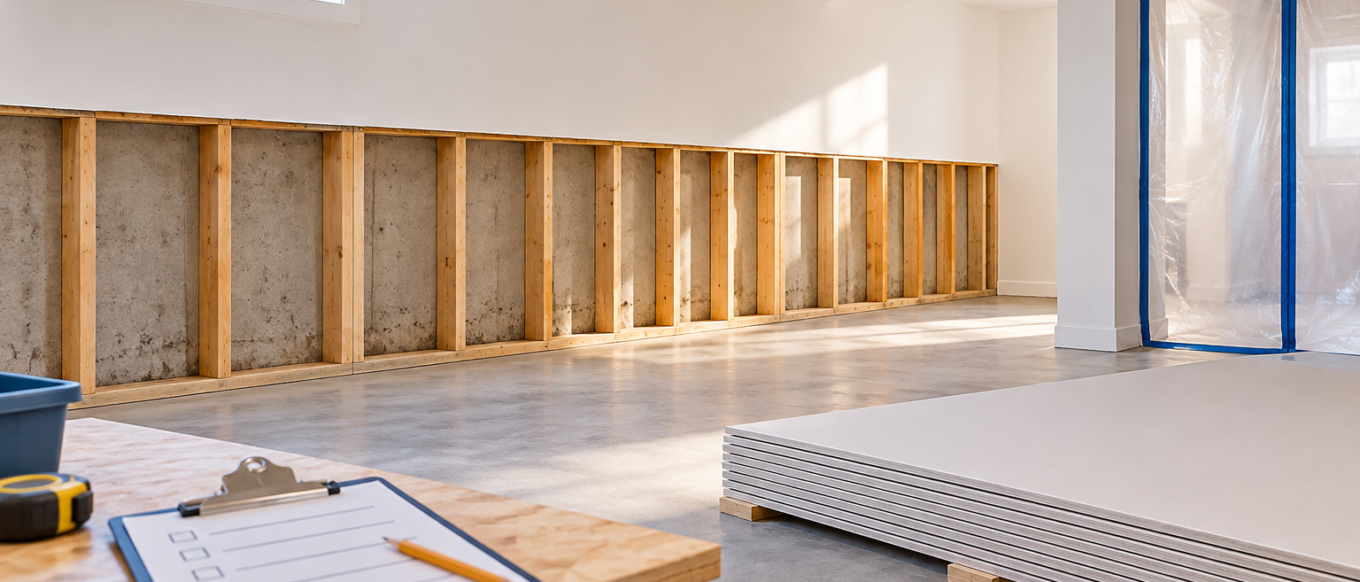
Removing affected drywall may leave framing and other surfaces exposed. That access is valuable: the assessor can evaluate the completed work against the project’s requirements before new insulation, wallboard or trim conceals it.
The practical question is not simply, “Has the crew finished?” Ask, “Has the work been checked, and what still needs to happen before rebuilding?” Those can have different answers. A contractor’s last cleanup day and the day your carpenter can safely proceed should not automatically be the same date.
Before anyone covers the area, share the rebuild schedule with the assessor and remediation contractor. Ask who will tell you that the project is ready for the next trade, and request that answer in writing.
What does mold clearance mean in New York?
For work covered by New York’s mold licensing law, assessment and remediation have separate roles. The assessor establishes the cleanup scope and criteria; the remediation contractor performs the work. The New York State Department of Labor’s mold program explains the independence requirements and the framework for these services.
Under New York Labor Law Section 947, a post-remediation assessment considers whether visible mold remains, whether the work follows the assessment plan and contractor work plan, and whether clearance criteria have been met. The assessor also considers whether the underlying cause has been addressed to the extent feasible.
When the applicable criteria are met, the assessor provides a written passed clearance report. If the project does not meet them, the written findings should identify what remains to be addressed. This is a project-specific conclusion, not a promise that the house will never develop mold again.
Inside Diagnostics offers independent post-remediation verification. It does not perform mold cleanup or rebuilding.
Does clearance always require an air test?
No. Do not assume that ordering an air sample is the entire clearance process, or that every project requires one.
The EPA’s guidance on mold sampling explains that sampling is often unnecessary when visible mold is present and that there are no federal airborne mold limits against which to judge compliance. Sampling, when appropriate, needs a clear purpose and professional interpretation.
For your project, ask what the remediation plan requires. Verification may involve visual observations, moisture-related findings and sampling where appropriate or specified. A laboratory result should be considered alongside the condition of the work area and the agreed criteria, rather than treated as a universal “safe house” certificate.
Dry-looking walls are not the whole moisture story
The EPA’s homeowner guide emphasizes correcting the water or moisture problem as part of successful cleanup. Otherwise, mold can return. Paint, fresh drywall and a pleasant smell do not substitute for addressing the conditions that allowed the problem.
Ask the appropriate repair professional what was fixed and how the repair was checked. Depending on the situation, that may mean coordinating with a plumber, roofer or another qualified contractor. Keep their documentation with the mold project paperwork.
Inside Diagnostics provides independent assessment and testing services, not moisture-intrusion source diagnostics or repair work. If the water issue remains unresolved, discuss that limitation with the assessor and the relevant repair contractor before agreeing to conceal the area.
There is no useful blanket rule that every room is ready after a certain number of days. Materials, conditions and the project requirements matter more than a calendar countdown.
A short checklist before the drywall delivery
You do not need to become a mold specialist to keep the handoff organized. Have these questions ready:
- What area was included? Confirm which rooms, wall sections and materials the assessment and cleanup addressed.
- What document defines completion? Keep the mold remediation plan and its clearance criteria available to everyone coordinating the work.
- Who schedules verification? Agree on the contact person before the cleanup crew finishes.
- What must remain accessible? Ask the assessor and contractor before covering surfaces or changing the work area.
- Are there outstanding repairs or conditions? Get a clear list, including who is responsible for each item.
- Who receives the report? Make sure you receive and read it, rather than relying on a verbal message passed between trades.
Photos and invoices can help explain the sequence, but they do not replace the assessor’s findings. Save everything in one project folder so you are not searching through text messages when a scheduling question comes up.
What if the project does not pass?
Pause the affected rebuild work and ask for the specific remaining items. Clarify which contractor will address them, whether the assessment plan needs clarification, and how another evaluation will be arranged.
A failed or incomplete check is useful information while the work is still accessible. Covering it up to keep a carpenter’s appointment can create a much harder decision later. Avoid asking for a different test merely to obtain a more reassuring result; first understand the observed problem and the criteria that were not met.
Plan the handoff before the room looks finished
For homeowners coordinating projects across Westchester, Putnam, Dutchess, Orange and Rockland counties, the most useful planning step is often a shared schedule: cleanup, verification, any corrective work, then rebuilding. Leave room for the findings rather than booking every trade back-to-back.
If you need an independent review after mold cleanup, contact Inside Diagnostics to request a post-remediation verification appointment. Have the assessment plan, cleanup scope and anticipated completion date ready. Explaining where the project stands helps establish what needs to be reviewed before the new walls go up.