






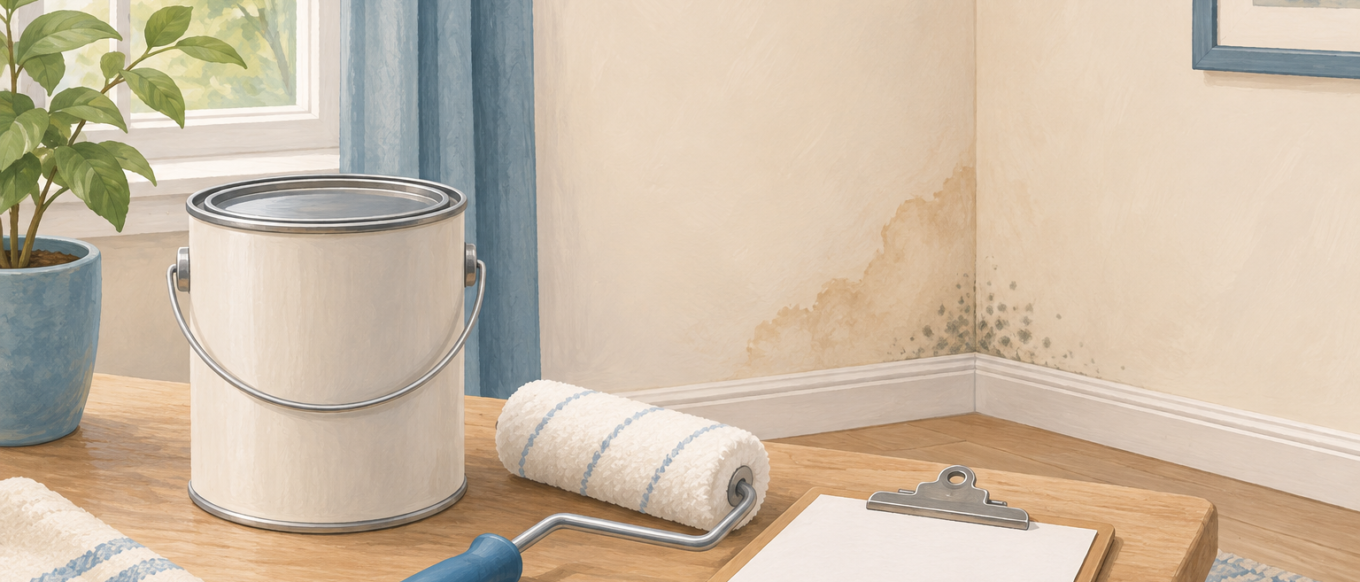
No. A wall that feels dry is not automatically ready for paint if mold is still present. Address the moisture problem, complete appropriate cleanup or removal, and confirm the surface is suitable before decorating. The EPA advises against painting or caulking over moldy surfaces. Drying matters, but it does not replace removing mold.
That can be frustrating when a leak has stopped and you just want the room back. A stained corner can make an otherwise finished room feel unfinished. Still, separating the cleanup decision from the paint decision helps you avoid covering a condition that needs attention.
Why “it feels dry” does not settle the question
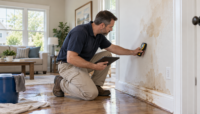
Your hand tells you how the exposed surface feels at that moment. It does not document what happened inside the wall or establish that the remaining marks are only cosmetic. If you are unsure whether the area was properly cleaned, pause before choosing a primer.
New York’s Department of Labor mold guidance specifically cautions against leaving dry mold behind after cleaning because it can still cause allergic reactions in some people. It also advises against painting over mold. The practical takeaway is simple: “dry now” and “cleanup complete” are different questions.
For a homeowner, the useful next step is to gather the history. When did the leak happen? What was repaired? Who checked the affected materials? What cleanup was performed? If those answers are missing, a new coat of paint will not supply them.
What if it is only an old water stain?
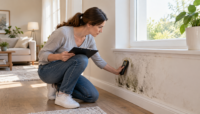
Not every discolored patch is mold. Water damage, surface dirt and other conditions can leave marks. A photograph or the color of a spot alone should not be treated as a diagnosis.
The EPA notes that mold can leave cosmetic staining even after cleanup. That is why the history and completed work matter. A remaining discoloration may need cosmetic treatment, but first establish that the moisture issue and any mold have been addressed. Do not assume that every mark must disappear before a surface can be restored, or that a faded mark proves cleanup is finished.
If a contractor says, “That is just an old stain,” ask what supports that conclusion. A clear explanation of the repair and cleanup is more useful than reassurance based only on appearance.
Does mold-resistant paint solve the problem?
A paint product should not be used as a substitute for the cleanup steps described by the EPA. Choosing a coating comes later, once the underlying surface is ready. Even a product marketed for damp rooms should be used according to its label and preparation instructions.
Before buying anything, ask the painter what surface conditions the product requires and what work is included in the quote. Does the proposal cover only priming and painting, or is someone separately responsible for the water repair and affected materials? Put that distinction in writing.
You do not need to become a paint chemist. You do need to know whether the proposed job is cosmetic restoration or actual correction of the problem that caused the damage.
The wall material changes the next step
A hard, cleanable surface and a porous, damaged material may need different treatment. The EPA’s basic cleanup guidance explains that mold can be difficult or impossible to remove completely from some porous materials. Painting over the face does not resolve that question.
If drywall is soft, crumbling or otherwise damaged, ask a qualified professional whether it can remain. Avoid opening the wall simply to satisfy curiosity. EPA guidance cautions that investigating hidden mold can disturb it and spread contamination.
For an older New York home, planned disturbance also deserves a separate conversation about other building-material hazards. Tell the appropriate professional what you intend to remove before demolition starts. Do not sand, scrape or cut suspect materials as a shortcut to getting a paintable surface.
When should you bring in professional help?
The EPA’s homeowner mold guide identifies circumstances that need additional care, including extensive water damage, larger affected areas, contaminated water and suspected mold in an HVAC system. If you have health concerns, speak with a healthcare professional before attempting cleanup.
In New York, assessment and remediation are distinct roles. The Department of Labor explains licensing requirements and provides license-search resources. Its guidance also describes exemptions, so avoid assuming one rule applies identically to every homeowner and every project.
Our mold assessment information page explains the assessment side of the process. Reviewing the roles can help you ask better questions before agreeing to work. It does not replace a project-specific evaluation or confirmation of current service availability.
Five questions to answer before painting
Use this short checklist when speaking with the people involved in your repair:
- What caused the moisture? Ask what was repaired and whether any additional trade needs to be involved.
- What materials were affected? Make sure the discussion includes the actual wall area, not only the most obvious spot.
- What cleanup or removal was completed? Request a plain-language description rather than a promise that paint will cover everything.
- What remains before finishing? Identify any required project documentation, assessment or follow-up before the painter begins.
- Who will handle a recurrence? Keep contact details and the written scope so you know whom to call if staining or odor returns.
Save dated photos, repair invoices and any assessment or remediation documents together. This is useful whether you are repairing your own bedroom, coordinating a rental-property repair or planning a larger renovation in Westchester or a nearby Hudson Valley county.
Make painting the finishing step
There is no need to rush straight from “the leak stopped” to “the painter is coming.” A brief pause to clarify the work can prevent confusion between the plumber, cleanup contractor and painter. Ask who is responsible for confirming each stage is complete.
If you want to discuss your project, use our contact and appointment-request page to confirm which services are currently available before booking. Inside Diagnostics does not perform mold remediation or repair the source of water intrusion.
For the painting decision itself, keep the order clear: address the water problem, resolve the mold and affected-material questions, and then restore the finish. A dry-looking wall is a starting observation, not permission to paint over mold.