






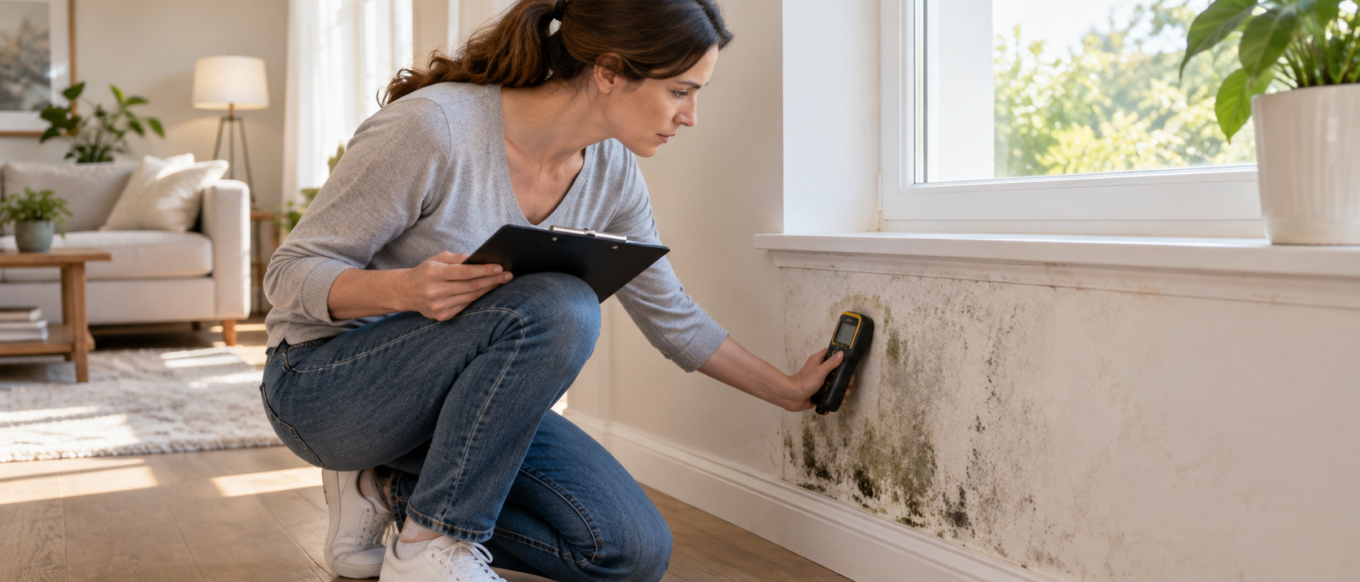
Yes, most houses with mold can be saved. Finding mold does not usually mean a home is ruined or needs to be torn down. The bigger question is how much moisture damage has occurred and which building materials have been affected. Small areas may require relatively simple cleanup, while widespread mold caused by long-term leaks or flooding can require removal of drywall, insulation, flooring, or other damaged materials. The key is correcting the moisture source first. If the underlying water problem remains, mold is likely to return.
Mold Does Not Automatically Mean the House Is Ruined
Seeing mold in a house can be alarming, particularly when it appears behind drywall, across a basement wall, or after a significant water leak.
But mold itself does not automatically make a house unsalvageable.
Homes are made from many different materials, and mold affects those materials differently. Some surfaces can be cleaned. Other materials may need to be removed and replaced.
The real concern is usually the combination of mold, moisture, and physical damage to the building.
A bathroom with a small area of mold around a window is very different from a house that sat wet for weeks after a major flood.
Both involve mold, but they are not remotely the same problem.
What Determines Whether Mold Damage Can Be Repaired?
Several factors matter more than simply knowing that mold is present.
How Long Has the Area Been Wet?
Time matters.
Mold can begin growing when building materials remain damp, and the longer a moisture problem continues, the greater the chance that damage will spread.
The EPA recommends drying wet or damp materials within approximately 24 to 48 hours when possible to help prevent mold growth.
A plumbing leak discovered the same day is one situation.
A slow leak behind a wall that has gone unnoticed for six months is another.
Long-term moisture can affect drywall, insulation, flooring, wood components, and other materials far beyond the area where staining first becomes visible.
How Large Is the Affected Area?
A small isolated area is generally easier to deal with than mold affecting multiple rooms or levels of a house.
The EPA uses approximately 10 square feet as a general point at which homeowners should consider additional professional guidance, particularly when there has been significant water damage. That is not a rule determining whether a house can be saved; it is simply one factor in deciding how cleanup should be approached.
Large mold problems often require more planning because damaged materials need to be removed without unnecessarily spreading contamination into unaffected areas.
What Materials Are Moldy?
This makes a major difference.
Hard, nonporous surfaces can often be cleaned and thoroughly dried.
Porous materials are more complicated.
Materials such as drywall, ceiling tile, insulation, carpeting, and some types of engineered wood can absorb moisture. Mold may grow into spaces that cannot be effectively cleaned from the surface.
The EPA notes that some absorbent or porous materials may need to be discarded when they become moldy because complete cleaning can be difficult or impossible.
That still does not mean the house itself is lost.
It may simply mean affected building materials need to be removed and replaced.
What About Mold on Wood Framing?
Homeowners often become particularly concerned when mold is discovered on structural wood.
Visible mold on framing does not automatically mean that the wood has lost its structural strength.
The important question is whether prolonged moisture has caused actual deterioration, decay, or other damage.
Mold growth and structural wood rot are not the same thing.
A piece of framing may have surface mold while remaining structurally sound. On the other hand, a long-standing water problem can eventually contribute to serious deterioration that requires repair.
If structural damage is suspected, the condition of the wood needs to be evaluated rather than assuming that its appearance alone tells the whole story.
The Moisture Problem Has to Be Fixed
This is the most important part of mold remediation.
You can remove moldy drywall, replace insulation, clean framing, repaint a room, and install new flooring.
But if the roof is still leaking, the basement is still taking in water, or a pipe continues to leak behind the wall, the mold problem can come back.
The EPA repeatedly identifies moisture control as the key to controlling indoor mold growth.
Common sources include:
- Plumbing leaks
- Roof leaks
- Basement water intrusion
- Poor drainage around the foundation
- Condensation
- High indoor humidity
- Improper bathroom ventilation
- HVAC-related moisture
- Window and exterior wall leaks
- Previous flooding
The source does not always have to be dramatic. A small amount of water entering the same location repeatedly can create a significant problem over time.
Can You Just Paint Over Mold?
No.
Painting over visible mold is not remediation.
Even if the wall looks better temporarily, the underlying growth and moisture problem have not necessarily been corrected.
The EPA specifically recommends cleaning and drying affected surfaces before painting and notes that paint applied over moldy surfaces is likely to peel.
If drywall or another porous material is significantly affected, replacement may be more appropriate than trying to cover the problem.
The goal should be to address the cause and the affected material — not simply hide the staining.
Does the Type of Mold Determine Whether the House Can Be Saved?
Usually, the extent and source of the problem matter more than the name of the mold.
Homeowners sometimes become focused on whether a laboratory report identifies one particular species or another.
Identification can be useful in certain situations, but finding a particular type of mold does not automatically determine whether a home can be repaired.
Molds can grow on wood, paper, carpet, and many other materials whenever adequate moisture is available.
From a building standpoint, the practical questions remain:
Where is the moisture coming from?
How much material is affected?
Can those materials be cleaned, or do they need to be removed?
Has any physical damage occurred?
Those questions usually tell you much more about the condition of the house.
When Does Mold Become a Serious Home Repair?
Mold becomes more complicated when it is associated with major water damage or widespread hidden moisture.
Examples may include:
- A basement that has repeatedly flooded
- A roof leak affecting several rooms
- Mold throughout a finished basement
- Water damage hidden behind multiple walls
- Long-term plumbing leaks
- Mold involving insulation and wall cavities
- Significant deterioration of flooring or framing
These situations can still often be repaired, but the project may involve considerably more than simply cleaning mold.
Damaged building materials may need to be removed, the source of water corrected, affected areas dried, and portions of the house reconstructed afterward.
What Should New York Homeowners Know?
New York regulates professional mold assessment and remediation.
If a homeowner chooses to hire mold professionals, the individuals performing covered mold assessment and remediation work generally must hold the appropriate New York State licenses. The state also separates mold assessment from remediation on the same project, so the same licensee cannot perform both roles.
The purpose of the assessment is to identify the mold and moisture conditions and establish what needs to be addressed.
The remediation contractor then performs the cleanup according to the required scope.
Homeowners working on their own residential property are exempt from the state’s mold licensing requirement.
So, Can Your House Be Saved?
In most cases, yes.
Mold is a building problem that needs to be investigated and corrected, but it does not automatically mean a home is permanently damaged.
The biggest factors are how long the moisture problem has existed, how much of the building is affected, which materials are involved, and whether the water source can be permanently corrected.
The mistake is not finding mold.
The bigger mistake is removing what you can see without figuring out why it grew there in the first place.
Correct the moisture problem, properly address the affected materials, and most homes can be successfully restored.