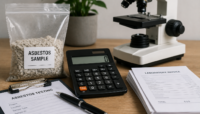




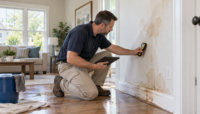
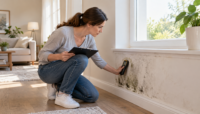
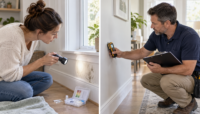
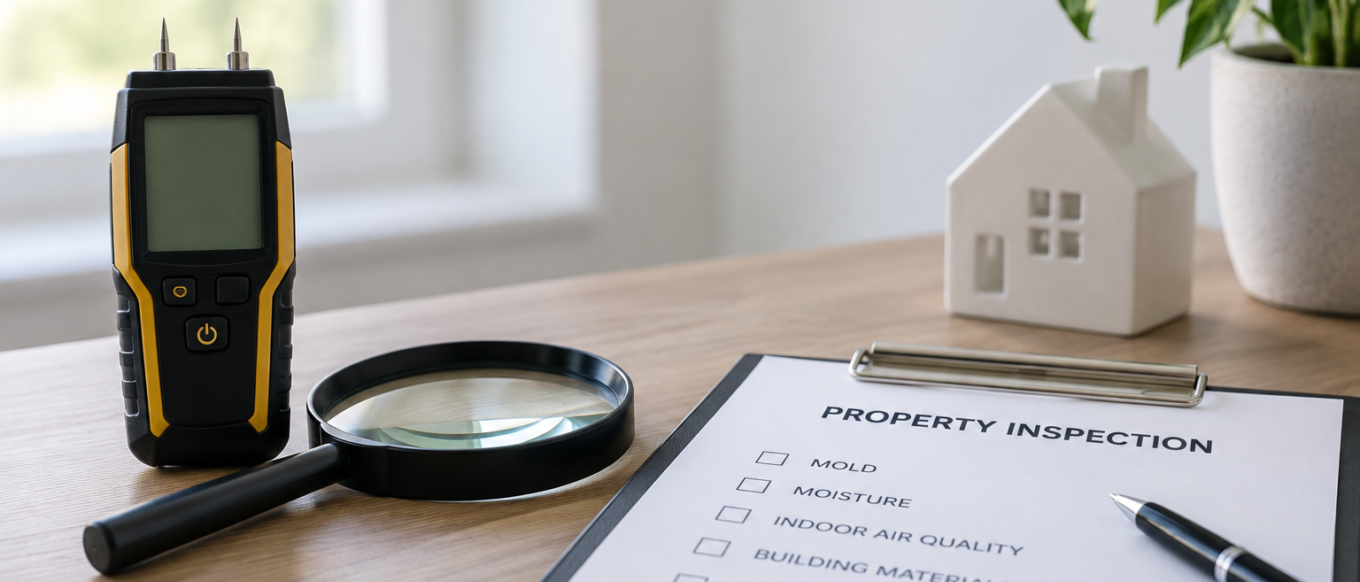
If you are hiring a professional for a mold inspection in Westchester County, expect to pay about $400 to $850 for most residential properties. A straightforward mold assessment will often fall somewhere around $500 to $700, while larger homes, multiple problem areas, extensive moisture concerns, or additional laboratory samples can increase the price.
The important part is understanding what the quoted price actually includes. A mold inspection, laboratory testing, a written assessment, and a remediation plan are not always priced the same way, so comparing two companies based only on the starting price can be misleading.
What Does a Mold Inspection Include?
A professional mold assessment is more than someone walking through the house looking for black spots on a wall.
The assessor is trying to determine whether there is visible mold, evidence of excess moisture, conditions that could support mold growth, or signs that a hidden problem may be present.
Depending on the property and the reason for the inspection, an assessment may include:
- Visual inspection of accessible areas
- Moisture measurements in walls, ceilings, floors, and other materials
- Inspection of areas with previous leaks or water damage
- Evaluation of basements, bathrooms, attics, and other moisture-prone areas
- Air or surface sampling when appropriate
- Laboratory analysis of collected samples
- Photographs and documentation
- A written assessment or remediation plan when required
Not every home needs every type of testing. In fact, taking more samples does not automatically make an inspection better.
The purpose of sampling should be to answer a specific question.
How Much Does Mold Testing Cost?
Mold testing can be included in the inspection price or charged separately.
For a typical home, an assessor may collect an outdoor control sample along with one or more indoor air samples. Surface samples may also be useful when there is visible material that needs laboratory identification.
Additional samples increase the cost because each one requires collection, handling, and laboratory analysis.
For example, a homeowner concerned about one basement room may need far less sampling than someone who has moisture problems on three floors of a large house.
This is one reason you may see one company quoting $450 and another quoting $700 for what sounds like the same service.
Before agreeing to testing, ask:
How many samples are included in the price, and how much does each additional sample cost?
That usually tells you much more than simply asking for the inspection price.
What Makes a Mold Inspection More Expensive?
There is no single price that works for every property.
Size of the Home
A small condo with one suspected problem area is very different from a 5,000-square-foot home with a basement, attic, multiple bathrooms, and several previous leaks.
Larger properties generally require more inspection time.
Number of Problem Areas
One leaking bathroom is relatively straightforward.
A home with a basement odor, staining around several windows, an old roof leak, and a history of plumbing problems takes considerably more time to evaluate properly.
Mold Sampling
Laboratory testing can raise the total price, particularly when several indoor locations need to be compared.
More samples do not necessarily mean a more accurate inspection. Sampling should be based on what the assessor is trying to determine.
Moisture Problems
Mold and moisture usually go together.
If there has been a roof leak, plumbing failure, basement water intrusion, condensation problem, or flooding, the assessor may need to spend additional time determining how far the moisture traveled and whether building materials remain damp.
Written Remediation Plan
If professional mold remediation is necessary, the assessment may need to document the affected areas and establish the scope of work for the remediation contractor.
That is different from a simple visual inspection or basic mold test.
Do You Always Need Mold Testing?
No.
This is one of the biggest misconceptions about mold inspections.
If there is obvious visible mold and a known moisture source, collecting several air samples may not provide much useful information. The more important questions may be how extensive the affected area is, what caused the moisture, and what needs to be corrected.
Testing can make more sense when the source of an odor is unclear, there is concern about hidden mold, different areas of the home need to be compared, or additional documentation is needed.
A good assessor should be able to explain why a sample is being collected and what information it is expected to provide.
You should not be paying for samples simply because there happens to be room in a sampling kit.
Is a $200 Mold Inspection the Same as a $600 Assessment?
Usually not.
Very inexpensive offers are worth examining carefully.
Some low-cost or “free” mold inspections are offered by companies that also make money performing the remediation. That does not automatically mean the inspection is wrong, but New York has specific rules designed to separate mold assessment from remediation.
When you compare prices, look at the actual scope of the service.
Is the person performing a detailed moisture assessment?
Are laboratory samples included?
Will you receive written findings?
Is a remediation plan included if one is necessary?
Is the assessor properly licensed?
Those details matter much more than the advertised starting price.
New York Has Mold Licensing Requirements
New York is different from many states because mold assessment is regulated.
A professional performing mold assessment work for the public must have the appropriate New York State mold license. New York also prohibits the same licensee from performing both the mold assessment and mold remediation on the same project.
That separation is important.
The assessor determines what is happening and, when remediation is necessary, defines the work that needs to be completed. The remediation contractor then performs the cleanup based on that scope.
When hiring someone for a mold assessment in Westchester County, homeowners should verify that the company and assessor meet New York State licensing requirements.
When Is a Mold Inspection Worth the Cost?
A professional assessment makes the most sense when you need an independent answer about what is happening in the property.
Common reasons include:
A basement that consistently smells musty.
Water staining that keeps returning.
A roof or plumbing leak that may have affected hidden materials.
Visible mold that appears more extensive than expected.
A home purchase where moisture or mold is a concern.
Previous remediation that needs to be evaluated.
Unexplained moisture readings or deterioration in walls and ceilings.
In situations like these, spending several hundred dollars to understand the problem before beginning repairs can prevent much more expensive guesswork later.
What Should You Expect to Pay in Westchester County?
For most homeowners, approximately $400 to $850 is a reasonable working range for a professional mold inspection or assessment in Westchester County.
A straightforward residential assessment may fall around $500 to $700.
The price can be higher when the property is large, the moisture problem is complicated, numerous areas need to be investigated, or extensive laboratory sampling is requested.
Instead of looking for the cheapest inspection, ask exactly what is included.
A clear quote should explain the inspection scope, whether testing is included, how many samples are included, what additional samples cost, and what type of report you will receive.
That makes it much easier to compare companies fairly and helps ensure you are paying for information that is actually useful.