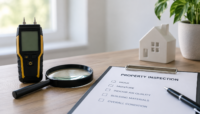




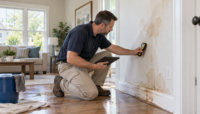
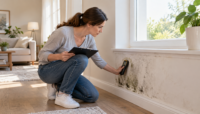
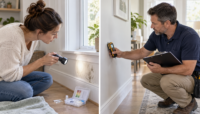
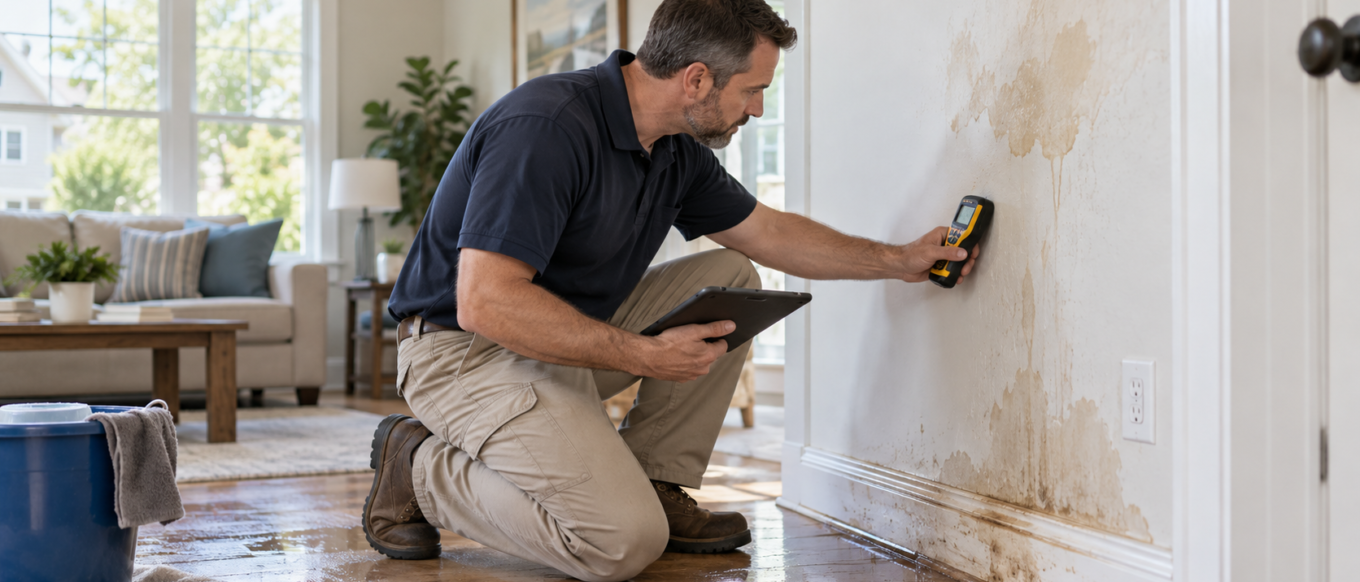
Not every water leak requires a mold inspection. If a small leak was discovered quickly, the source was repaired, and wet materials were completely dried within about 24 to 48 hours, mold may never become a problem. A professional mold assessment becomes more reasonable when materials stayed wet for several days, flooding affected walls or flooring, you notice visible growth or a musty odor, or you are unsure whether moisture remains hidden behind finished surfaces. The EPA recommends drying water-damaged materials within 24 to 48 hours whenever possible to help prevent mold growth.
How Quickly Can Mold Become a Problem After a Leak?
The first thing to think about after water enters a home is not mold testing. It is drying.
Mold spores are naturally present in indoor and outdoor environments. They become a building problem when they land on materials that remain damp long enough to support growth.
That is why the first 24 to 48 hours after a leak are important.
The EPA recommends cleaning and drying wet building materials and furnishings within that window whenever possible. Materials that are dried quickly are much less likely to develop mold growth.
That does not mean mold suddenly appears everywhere at exactly 48 hours. The condition of the building, temperature, materials involved, amount of water, and how thoroughly everything was dried all matter.
Think of 24 to 48 hours as a practical reason to act quickly, not as a countdown clock.
A Small Leak Does Not Automatically Mean You Need an Inspection
Imagine a supply line under your kitchen sink develops a small leak.
You notice it right away, shut off the water, repair the connection, remove the wet contents of the cabinet, dry the area completely, and confirm that the surrounding materials are no longer damp.
In a situation like that, hiring a mold assessor may provide very little additional value.
The same may be true for a small amount of water from an overflowing sink or appliance when the water is cleaned up immediately and never reaches hidden cavities or porous materials.
The important questions are:
How much water was involved?
How long were materials wet?
Where did the water travel?
Were the affected areas completely dried?
Those questions matter more than the simple fact that a leak occurred.
When Should You Consider a Mold Inspection?
A mold assessment becomes more useful when there is uncertainty.
The Leak Was Not Discovered Right Away
Slow plumbing leaks are a common example.
A pipe may drip behind a wall, under a cabinet, or above a finished ceiling for weeks before staining becomes visible.
By the time you notice the problem, drywall, insulation, wood, or flooring may have been exposed to moisture much longer than you realize.
In that situation, looking only at the visible stain may not tell you the full story.
Materials Stayed Wet for Several Days
If carpeting, drywall, insulation, flooring, or other materials remained wet beyond the initial drying period, the chance of mold growth becomes more concerning.
Porous materials can also hold moisture below the surface even when the outside begins to feel dry.
For example, carpet may appear dry while padding underneath remains damp. The EPA specifically notes that both carpeting and its backing or padding need to be dried after water exposure.
You Notice a Persistent Musty Odor
A musty smell after a leak is worth investigating.
Sometimes mold is visible. Other times growth may occur behind drywall, below flooring, inside a cabinet, or in another concealed area.
The EPA notes that investigating suspected hidden mold can be difficult and may be a reason to consider an experienced professional.
Visible Mold Appears
If mold growth becomes visible after water damage, the situation has changed.
Interestingly, this does not necessarily mean you need air testing.
If mold is already clearly visible, the EPA states that sampling is generally unnecessary.
The more useful questions may be how much material is affected, whether mold extends into concealed areas, what caused the moisture, and what needs to be removed or cleaned.
A mold assessment and mold testing are not necessarily the same thing.
What About a Major Flood?
Flooding deserves more attention than a small plumbing leak.
Water can travel under flooring, behind baseboards, into drywall, insulation, wall cavities, cabinets, and other areas that are difficult to inspect from the surface.
The amount of water also makes complete drying more difficult.
If a finished basement takes on several inches of water, simply running a dehumidifier until the room feels dry does not necessarily tell you what happened behind the walls or underneath the flooring.
Floodwater can also introduce concerns beyond mold, particularly when the source of the water is contaminated.
The EPA advises consulting a professional when mold or water damage is extensive or when the water is not clean.
For a significant flood, professional drying and moisture evaluation often matter more than immediately ordering a mold air test.
Should I Test the Air After a Water Leak?
Not automatically.
This is where homeowners can end up spending money without getting a useful answer.
There are no federal EPA limits defining a specific concentration of airborne mold spores that makes a home pass or fail. Air sampling also represents conditions during a particular period rather than providing a permanent measurement of the building.
Professional sampling can still be useful in certain situations, but there should be a reason for collecting it.
For example, an assessor may decide sampling is useful when investigating an unclear condition, comparing areas of a property, or documenting a particular concern.
But a leak alone does not automatically mean every room needs an air sample.
The inspection of the building and the moisture conditions should guide the testing — not the other way around.
What Should You Check After a Leak?
After the immediate water problem has been controlled, pay attention to the materials around the affected area.
Look for:
- Water staining that grows or returns
- Swollen baseboards or trim
- Soft or damaged drywall
- Bubbling or peeling paint
- Warped flooring
- Damp carpeting or padding
- Musty odors
- Visible discoloration or suspected mold growth
- Areas that continue to feel damp
- Moisture that may have traveled into rooms below the leak
Also remember that the visible water may not show you everywhere the water traveled.
A bathroom leak on the second floor, for example, may affect the floor assembly, ceiling below it, insulation, wall cavities, or nearby materials.
That is when moisture measurements and a more systematic inspection can become useful.
Should I Open the Wall to Look for Mold?
Not necessarily.
Opening walls without a reason can create additional repairs and may disturb concealed mold if growth is present.
Before cutting into finished surfaces, it often makes more sense to evaluate the history of the leak, visible damage, accessible moisture readings, odors, and surrounding conditions.
If those findings suggest a hidden problem, limited investigation may then be appropriate.
The goal is not to tear apart the house looking for mold.
The goal is to determine whether there is reasonable evidence that moisture or mold may remain hidden.
What Should New York Homeowners Know?
New York does not require a homeowner to hire a mold assessor simply because mold or water damage is present.
The New York State Department of Labor specifically notes that the mere presence of mold does not create an obligation to obtain an assessment or perform remediation.
However, if you decide to hire someone professionally to perform mold assessment work, New York has licensing requirements.
The state defines mold assessment broadly to include inspections intended to identify mold as well as moisture conditions that may facilitate mold growth. Licensed mold professionals performing assessment and remediation on the same project must also remain independent; the same licensee cannot perform both roles.
Residential homeowners can inspect or work on their own properties without obtaining a mold license.
So, Do You Need a Mold Inspection After Water Damage?
Sometimes — but not simply because water entered the house.
If the leak was small, immediately repaired, and everything was completely dried within 24 to 48 hours, there may be little reason to order a mold inspection.
A professional assessment becomes more worthwhile when:
- Water remained for several days
- The leak was hidden or went unnoticed
- A significant flood occurred
- Drywall, insulation, carpeting, or flooring became saturated
- You smell a persistent musty odor
- Visible mold has appeared
- You are unsure whether walls or floors completely dried
- Water traveled into areas that are difficult to inspect
The best question is not “Did my house have a leak?”
It is “Did the leak leave behind a moisture problem that I cannot confidently evaluate?”
If the answer is yes, that is when a professional mold and moisture assessment can provide useful information.