






Yes. Some older drywall joint compounds contained asbestos, and you can’t tell by looking at a finished wall. The board, the compound at the seams, and any coating spread across the wall may be different materials. If a renovation will cut, sand, or remove an older wall, have a qualified asbestos inspector review the work before it starts. Share which walls are involved and whether the contractor will leave them intact, open a few sections, or remove them entirely. That helps determine whether you need targeted testing or a survey of the project area.
The wall you see is not one material
When you call a wall “drywall,” you’re usually describing the surface as a whole. Behind the paint, though, there may be a gypsum board, compound over its joints, and layers added during later repairs. A seam can disappear under paint without making the materials underneath the same. The EPA’s guidance on drywall and sheetrock notes that materials associated with drywall can contain asbestos and that testing is how you find out.
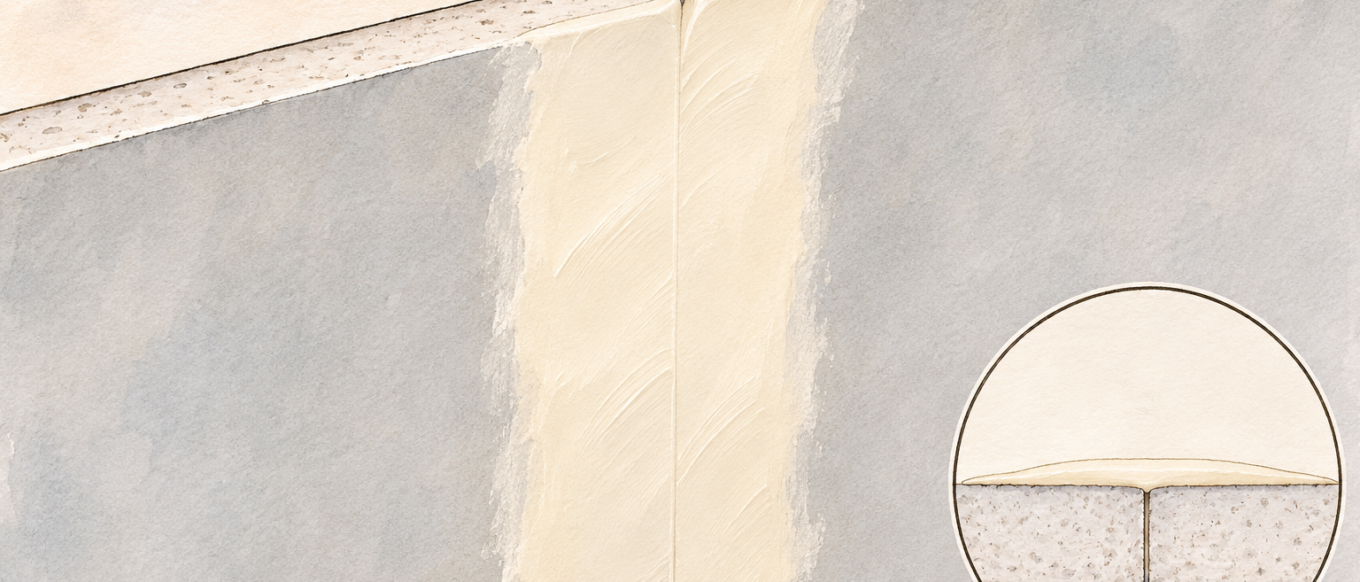
Joint compound at seams is used to smooth transitions between boards. It may also cover fastener heads or patched areas. A skim coat, by contrast, is a thin layer applied across a broader surface. An older wall might have either, both, or another finish altogether. That’s why the project scope and the material description matter more than the color of the wall. A coat of paint or a smooth appearance doesn’t resolve those differences. Neither does a single renovation date if the area was repaired or changed in stages.
The first question is what the contractor will disturb
A plan to repaint an intact surface is different from one that calls for sanding old patches, opening the wall for new wiring, or stripping the finish. What matters is the work the contractor will actually do, including preparation. If the proposal just says “prep walls,” ask whether that means cleaning and painting intact surfaces or disturbing existing material. You don’t need to open a wall to get that answer.
For example, imagine a hypothetical Westchester kitchen where one wall will be opened for electrical work, another will stay behind new cabinets, and part of the ceiling will come down. Those are three different work areas, even if the quote simply says “kitchen renovation.” A drywall sample from one wall doesn’t automatically answer questions about the ceiling or the finish on a separate patch. An inspector should review the complete scope before deciding what needs to be addressed.
If you’re comparing bids, ask each contractor to identify the rooms and surfaces involved and the prep work they expect to do. A written description or marked-up floor plan is useful. Photos of intact surfaces can help explain the layout, but they do not identify asbestos. If the contractor later adds an opening or changes which wall comes out, check whether the inspection still covers the revised work before it starts.
What a negative result does and doesn’t tell you
A laboratory result applies to the submitted material described in the report. If the material tested was wallboard, don’t assume the result also covers a different surface coating. And if a report documents compound from a particular room, don’t assume it covers compound throughout the house. Start with the sample description and collection location, then check the written scope and any exclusions. Our guide to reading an asbestos lab report explains how those details fit together.
Ask the inspector to explain the result in terms you can share with your contractor. Which parts of the job are covered? Were any materials inaccessible or outside the scope? What should happen if the contractor finds an unexpected layer? These questions are especially useful when a report from a previous owner or a different project is the only paperwork you have. A report may still be useful evidence without answering every question about your new work.
Don’t scrape, drill, cut, or sand a suspect material to find out what it is. If you’re already looking at an unexpected material during demolition, pause work that would disturb it and call a qualified asbestos professional for guidance. An inspection and lab report help you decide what to do next; they are not instructions for removing a material yourself.
When targeted testing is different from a survey
Targeted asbestos testing can answer a narrow question about a specific suspect material. A pre-renovation asbestos survey looks at the suspect materials within the area the project could affect. For work that includes walls, the ceiling, and flooring, it’s better to start by explaining the whole job than by requesting one drywall test and assuming the rest is covered.
The New York Department of Labor’s guidance for building permit applicants lists plaster, wallboard and joint compound among materials that can contain asbestos. It also explains survey requirements before renovation work and the role of a certified New York State asbestos inspector. For a permit-related project, tell the inspector the property’s municipality and check with the local building department about what it wants to receive. The Westchester permit lookup is a starting point, not a substitute for confirmation from your town.
What to have ready before you book
Gather the property town, a list of affected rooms or surfaces, and the contractor’s written scope if you have it. Note whether the walls or ceilings will be sanded, opened, or removed, and whether any earlier reports cover the same area. You don’t need to know which hidden layers are present. If you aren’t sure, tell the inspector where you have questions rather than making new openings to look.
Inside Diagnostics offers independent asbestos testing and surveys in Westchester, Putnam, Dutchess, Rockland and Orange counties. We collect samples when appropriate, coordinate laboratory analysis, and provide written documentation. We don’t perform removal or abatement. If you’re not sure whether a targeted test or a survey fits your renovation, request an appointment and share what the contractor plans to disturb. Sorting that out first can help you avoid paying for a test that doesn’t answer your actual project question.