




To read an asbestos lab report, match each sample number to its location and material, read every reported layer, then check the analysis method, result and footnotes. The laboratory pages tell you what was found in the submitted material. The inspection report explains where that material came from and how the findings relate to your project. Keep both together before making renovation decisions.
A report can look intimidating when it arrives as several pages of codes, percentages and small print. You do not need to become a laboratory analyst. You need to understand which line answers your question and which details still need an explanation.
Start with the paperwork, not the percentage
Open the complete attachment rather than a cropped screenshot. Check the project address, client or project name, collection date and report date. A laboratory may assign its own job number in addition to the inspector’s project reference. Different numbers are not necessarily an error, but there should be a clear connection between the documents.
Look for page numbering, a final or revised status, and attachments. If your email says more results are pending, do not treat the first attachment as the finished report. Save the complete version with your renovation documents, and keep any replacement report clearly identified so your contractor does not rely on an older copy.
Follow one sample from the room to the result
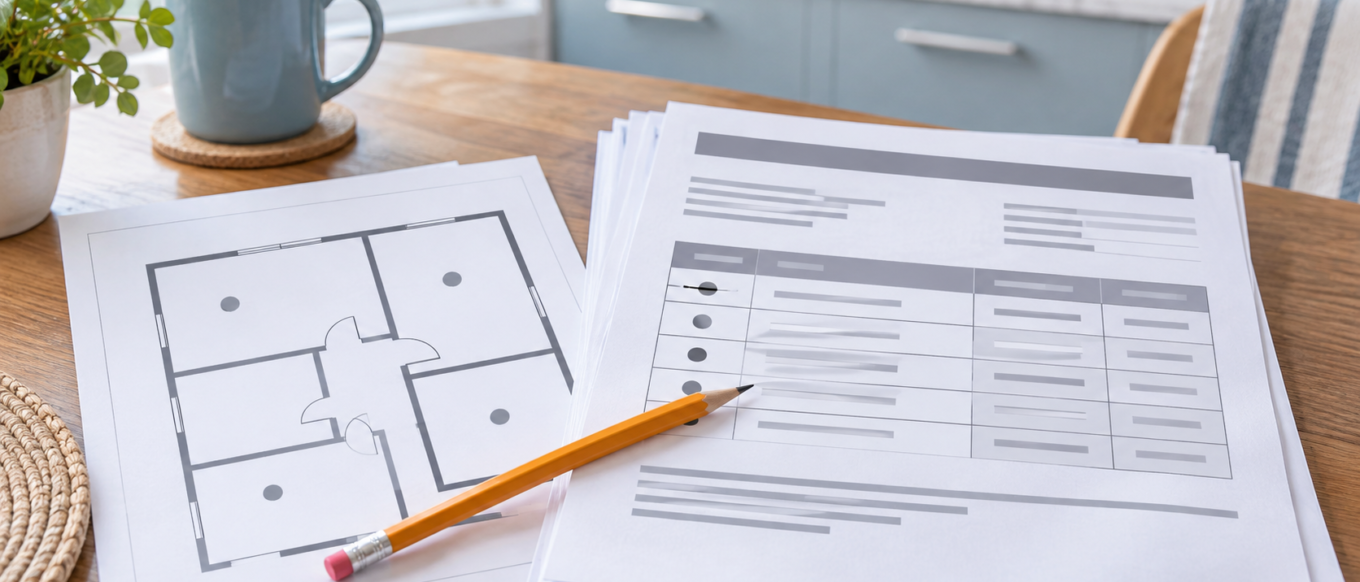
Find the field sample identifier first. It may look like S-01, K-2 or another short code. Next, locate the matching description in the inspection notes, photograph key or sample-location plan. The laboratory may also show a separate internal identifier alongside it.
Ask yourself: can I point to the material this row describes without guessing? “White material” is much less helpful to a homeowner than a description tied to a particular room and surface. If the connection is unclear, ask the inspector to explain it in writing rather than deciding that similarly colored materials are interchangeable.
New York’s asbestos survey guidance calls for identifiable sample locations and a clear account of the materials or areas evaluated. That is why the lab sheet and inspection documentation work together: the result needs a reliable location.
Read each layer as its own entry
One submitted sample can contain more than one distinguishable material. Depending on the material and applicable method, the laboratory report may separate these into additional rows or layer descriptions. Do not assume the first result applies to every line beneath the sample number.
Here is a deliberately simplified, fictional reading exercise. It is not a customer report, a sampling plan or a clearance decision:
- S-01, layer A: “Decorative coating; chrysotile, 3%.” This row reports asbestos in the described coating.
- S-01, layer B: “Underlying material; none detected.” This is a different reported layer. It does not cancel layer A’s finding.
- S-02: “Not analyzed.” This entry does not supply a negative result. The reason needs to be read in the notes or clarified.
The useful habit is to read across each complete row, then read the accompanying notes. Do not average separate layers yourself or pick the reassuring line. Ask the inspector how the reported layers are classified for the planned work.
Translate the result without adding promises
A named asbestos type, such as chrysotile, identifies what the analysis found. A reported percentage describes asbestos content in the analyzed material under that method. It is not the percentage of asbestos in your home’s air, a measurement of someone’s exposure, or a prediction of health effects.
“None detected,” “not analyzed” and “pending” are different statements. Read the laboratory’s legend for any abbreviation rather than assuming every lab uses the same shorthand. If “trace,” a less-than sign or a qualified result appears, request an explanation of the reporting convention and what it means for the project.
Do not translate a small percentage into “safe to remove.” The appropriate next step depends on the material, proposed disturbance and applicable requirements, not simply whether a number looks small. Our separate guide explains why a negative result does not cover the whole house; here, the priority is understanding the specific entries you received.
Notice the method and the footnotes
You may see PLM, meaning polarized light microscopy, or TEM, meaning transmission electron microscopy. New York’s sampling and testing overview lists different methods for bulk building materials and air samples. A bulk-material report is not an air-clearance report.
The method matters especially when a result includes a limitation or a recommendation for further analysis. New York’s ELAP asbestos FAQ explains limitations of PLM for certain non-friable organically bound materials and the role of TEM. Those technical notes should be resolved with the inspector and laboratory, not skipped because the result column looks reassuring.
A practical question is: “Is this the completed analysis needed for this material, or is another step outstanding?” You do not need to order a particular microscope test yourself. Ask for a clear explanation of the final result and any remaining qualification.
Ask these questions before your contractor starts
- Which exact material and location does each relevant result represent?
- Were all reported layers considered in the written conclusion?
- Are any results pending, qualified or not analyzed?
- Does the inspection scope match the work we now plan to do?
- Which documents should the contractor receive, and what remains unresolved?
For a kitchen renovation in Westchester or an older-home repair elsewhere in the Hudson Valley, the goal is the same: everyone should be discussing the same surface, location and work plan. Forward the complete report rather than rewriting its conclusion from memory. If the project changes, tell the inspector before assuming the existing paperwork still answers the new question.
Keep the material undisturbed while questions are resolved
Do not scrape, drill or collect another sample to investigate confusing wording yourself. EPA homeowner guidance recommends professional sampling and cautions against disturbing suspect materials.
Inside Diagnostics provides independent asbestos testing and surveys, not removal or abatement. If you are arranging testing before work begins, request an asbestos appointment and describe the planned project. Clear questions and complete paperwork are more useful than trying to interpret one isolated number.