






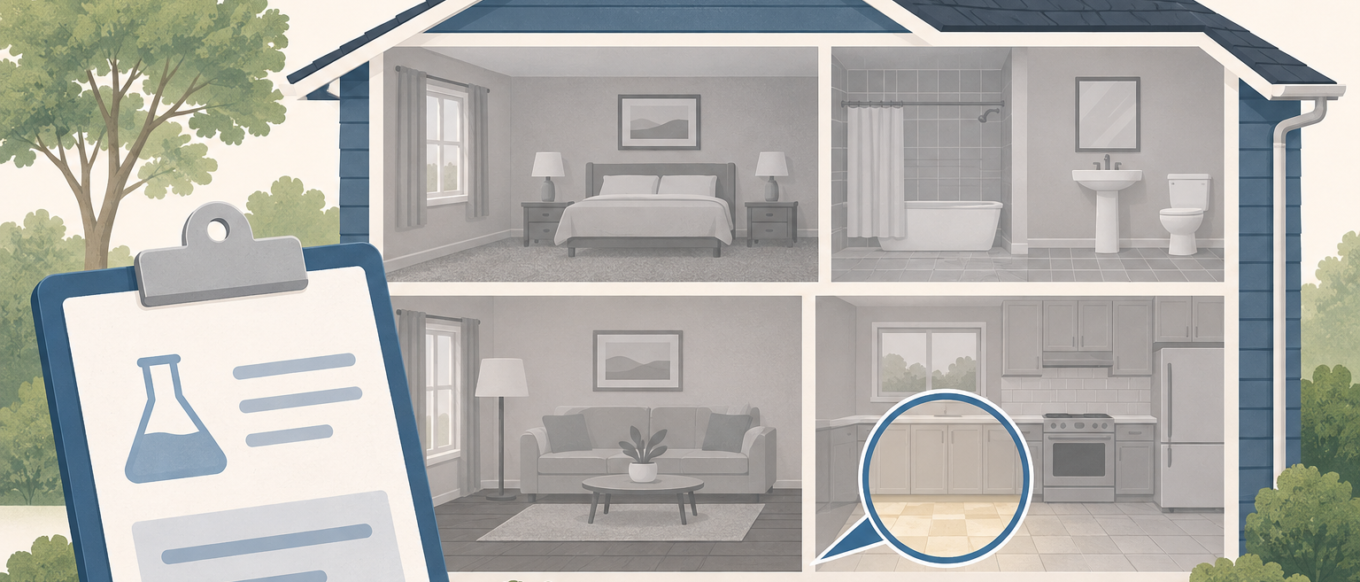
No. A negative asbestos result applies to the material represented by the samples and the scope documented in the inspection report. It does not automatically clear other rooms, hidden layers, or the entire house. Before relying on that result for renovation, match the sample descriptions, locations, laboratory findings, and inspection limitations to the materials your contractor will disturb.
That distinction can be easy to miss when an email arrives with reassuring results. Here is how to read the paperwork without turning a useful answer about one material into a promise about everything around it.
Start with what was actually tested
A laboratory examines the material submitted to it. The inspection documentation explains where that material came from and what area it represents. You need both parts to understand the result.
For example, imagine a report identifies a sample as kitchen ceiling texture. Even if the final result is negative, that entry alone does not answer questions about bathroom flooring, basement pipe insulation, or the adhesive underneath a different floor. This is a hypothetical example, not a description of a customer property.
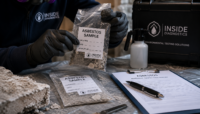
Inside Diagnostics’ asbestos testing service documents tested materials and the stated scope. A focused material test and a broader survey answer different questions, so the report title should never replace reading what was included.
Read the sample list before the conclusion
Open the complete report rather than relying on a screenshot of the result column. Work through the sample list and ask:
- Does the property address match?
- Which room and material does each sample describe?
- Are sample identifiers consistent between the inspection and laboratory pages?
- Are different layers listed separately?
- Are there comments, qualifications, pending analyses, or inaccessible areas?
If a description says only “floor,” ask for clarification before assuming it includes tile, backing, adhesive, and material beneath them. A clear description is especially helpful when several rooms have similar finishes.
Keep the full report together when sharing it with a contractor. Sending only a page with negative results can leave out the very limitations needed to use those results correctly.
Similar-looking materials need professional judgment
Two surfaces that look alike are not automatically the same material. A room may include a repair, an addition, or products installed at different times. Conversely, a properly planned sampling approach may represent a defined area without testing every square inch.
The practical question is: “Which area does this sampling represent, and how was that determined?” Let the inspector explain the sampling plan rather than guessing from color or texture.
EPA homeowner guidance explains that appearance generally cannot establish whether a material contains asbestos. It also recommends professional sampling because incorrect collection can release fibers. Do not scrape a second spot or pull up a layer yourself to check whether it matches.
Check what negative means on this report
Read the laboratory’s exact wording and notes. “No asbestos detected,” “inconclusive,” and a result with further analysis pending should not be treated as interchangeable answers.
New York has an important example involving certain non-friable organically bound materials, often called NOB materials. The state’s asbestos laboratory FAQ explains that an inconclusive result under PLM Method 198.6 must not be interpreted as non-asbestos-containing. Its guidance describes the role of quantitative TEM analysis in resolving these materials.
You do not need to choose a microscope yourself. Ask the inspector whether all required analysis is complete for the material involved and whether the final interpretation supports the proposed work. If the report contains a disclaimer you do not understand, get an explanation before treating it as permission to remove anything.
A material test does not measure the air
A bulk sample is a piece of building material. An air sample addresses a different question. New York’s sampling and testing guidance distinguishes methods for bulk materials from methods for airborne fibers.
A negative ceiling sample therefore does not document the air throughout your home, reconstruct a past exposure, or serve as post-abatement air-clearance paperwork. If your concern involves disturbed material or cleanup after removal, explain that situation when asking for advice. It may call for a different qualified professional or service than testing an intact material.
Understand the inspection limits
Look for language about accessible areas, concealed materials, exclusions, and assumptions. A report may identify places that could not be inspected without additional access. Read those statements as part of the findings, not as small print to skip.
Even a broad survey should be understood through its documented scope and limitations. If something unexpected appears during work, pause disturbance of that material and ask whether it was covered. A negative result from elsewhere in the house cannot supply the missing information.
For a defined remodeling area, a pre-renovation asbestos survey considers the project’s suspect materials more broadly than a test of one selected item. Confirm the appropriate scope before work begins.
Use the report for your actual New York project
For homeowners in Westchester and neighboring Hudson Valley counties, the same basic reading habit helps: connect the paperwork to the work. Tell your inspector what will be removed or disturbed, then give your contractor the complete documentation.
New York’s Code Rule 56 addresses asbestos surveys for demolition, renovation, remodeling, and repair, with specific responsibilities and exemptions. A negative result for one sample does not, by itself, establish that the project meets every applicable requirement. Ask the inspector and local building department which documentation your particular project needs.
Your next step after a negative result
Ask three plain questions: What material and area does this result represent? Is the analysis complete? Does the report address everything the planned work will disturb? Request written clarification when the answers are unclear.
Until that is settled, leave suspect material undisturbed. EPA advises against sweeping or vacuuming debris that might contain asbestos. A reassuring result for another material is not a reason to handle unfamiliar debris yourself.
Inside Diagnostics provides independent asbestos inspection, sampling, laboratory coordination, and written documentation, not removal or abatement. If you need testing for a planned project, request an asbestos appointment and describe the work and any existing report. A useful negative result gives you a specific answer you can act on once its boundaries are clear.