







A pre-work checklist for keeping survey reports, decisions and labor records organized
Before a renovation crew arrives, the asbestos paperwork should be easy to find and clearly connected to the work being planned. A laboratory attachment buried in an email or a screenshot forwarded without its report can leave the project manager and subcontractors working from different information.
A useful project file brings together the work description, complete inspection documentation, unresolved questions and the communications that affect scheduling. This checklist is for general contractors, property managers and owners coordinating renovation work in Westchester and the Hudson Valley. It is a practical organization guide, not a complete asbestos compliance checklist.
Start with a clear description of the work
Give the inspector more than a project name such as “kitchen remodel.” Explain which rooms are involved and what will be cut, opened, removed or otherwise disturbed. Include the current contractor proposal and a marked-up floor plan if available.
For example, replacing cabinets, removing flooring and opening a wall for new plumbing can involve different materials. A useful work description names each planned activity rather than leaving the inspector to infer it from the room name.
New York State Department of Labor’s asbestos survey guidance explains that the project scope determines the areas and materials that need to be represented in the survey. Keep the version of the work description used for that survey in the same folder as the completed report.
Keep the complete report package
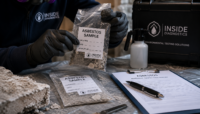
Save the inspector’s final documentation with its laboratory attachments, material descriptions and location information. Preserve any limitations, assumptions and recommendations as part of the record.
Before circulating the package, check basic details:
- The property address and project description match your job.
- The report date and version are clear.
- The attachments referenced in the report are included.
- Questions about a room, material or result are directed to the inspector.
New York’s survey-content guidance includes location information, inspector and firm credentials, laboratory reports and sample chain-of-custody documentation. Ask the preparer about anything that appears missing or inconsistent rather than trying to repair the report yourself.
Keep an untouched copy of the issued files. Put your own notes in a separate document so they cannot be mistaken for the inspector’s findings.
Record who received which documents
Choose one person to maintain the project folder and distribute updates. This might be the owner, general contractor or designated project manager.
Keep a short distribution record showing the recipient, date and report version sent. When a revised report arrives, identify the earlier version as superseded in your own filing system while retaining it for the project history.
A simple file name helps: “Property address – Asbestos survey – Issue date.” Use the same project reference for the scope, correspondence and contractor proposals. Avoid ambiguous names such as “latest report” that become misleading after another update.
Before each affected trade starts, confirm that its supervisor has the relevant current documentation and understands any unresolved questions. Receiving a file is not the same as having those questions answered.
Keep schedule changes and labor records together
Inspection visits, laboratory turnaround, additional evaluation and any separately arranged abatement can affect the renovation schedule. Document the actual sequence rather than reconstructing it when an invoice arrives.
Your project log can record the inspection date, the date results were received, work that remains on hold, revised appointments and the person responsible for the next step. Treat an anticipated result date as a scheduling estimate, not permission to begin disturbing materials.
Labor records help answer a different question: how much time was spent on the job. OnlineTimeCards.com provides a browser-based calculator for totaling entered start and end times and unpaid breaks, with printing and CSV download. A contractor can keep those time-card records alongside the job’s administrative records, using a consistent project reference when naming the exported files.
Time cards document hours entered. They do not establish asbestos exposure, replace required asbestos records or authorize a crew to proceed. Keep professional findings and work restrictions in their original documentation so an ordinary payroll record is never mistaken for a safety decision.
Review changes before expanding the work
When a customer adds another room or a trade needs a new access opening, record the change and send it to the inspector for review. Keep the written response and any revised documentation with the updated work description.
Do not assume that an existing result covers every material in the property. Our guide to changed renovation plans and existing asbestos surveys explains what information to gather when the scope grows.
If an unexpected suspect material appears, pause work that could disturb it and seek qualified guidance. Do not scrape it, collect a sample or clean up suspect debris yourself to keep the project moving. EPA’s asbestos precautions recommend professional sampling and warn against sweeping or vacuuming debris that may contain asbestos.
Make the next decision clear
At the front of the folder, keep a short status note with the current work scope, the report reference and any open questions. Assign an owner to each follow-up so a pending clarification does not disappear into a group email.
Ask the appropriate asbestos professional and building authority which survey, notification, permit and other requirements apply. New York’s asbestos survey requirements caution that construction date and exemptions under one provision do not eliminate other applicable obligations. A neatly organized folder helps people find the evidence; it does not itself establish compliance.
Inside Diagnostics provides independent asbestos inspection, sampling, laboratory coordination and written documentation for projects in Westchester, Putnam, Dutchess, Rockland and Orange counties. We do not perform removal, abatement, demolition or cleanup.
For help defining the inspection scope, visit our contractor asbestos testing page or contact Inside Diagnostics. Have the property location, current work description and any existing reports ready when you get in touch.