







Many homeowners understand that asbestos cannot be identified by appearance alone, but fewer know what actually happens during the sampling process. Whether you are planning a renovation, purchasing an older property, or evaluating building materials before demolition, asbestos testing typically begins with collecting representative samples for laboratory analysis.
Because asbestos fibers are microscopic, laboratory testing is generally required to determine whether a material contains asbestos. The quality of the laboratory results depends heavily on proper sample collection, which is why asbestos sampling follows established procedures designed to obtain representative material while minimizing unnecessary disturbance.
So, how are asbestos samples collected?
In most cases, a trained professional identifies suspect materials, collects small representative samples from those materials, properly labels and documents the samples, and submits them to an accredited laboratory for analysis. The sampling process varies depending on the type of material being evaluated, but the goal remains the same: obtaining enough material for accurate laboratory testing while limiting disturbance to the surrounding area.
For homeowners throughout New York and the Hudson Valley, understanding how asbestos samples are collected can help reduce uncertainty and provide a clearer picture of what to expect during the testing process.
Why Asbestos Sampling Is Necessary
One of the most important things homeowners should understand is that asbestos cannot typically be confirmed through visual inspection alone.
Many materials that contain asbestos look identical to materials that do not.
For example:
- Two floor tiles may appear identical but have different compositions.
- Similar ceiling textures may contain different ingredients.
- Older adhesives and mastics may or may not contain asbestos despite having a similar appearance.
Because visual identification is unreliable, laboratory analysis is generally required for confirmation.
The laboratory can only analyze the material that is submitted, making proper sample collection an essential part of the testing process.
When Are Asbestos Samples Typically Collected?
Sampling is most commonly performed before activities that may disturb building materials.
Examples include:
Renovation Projects
Homeowners planning to remodel kitchens, bathrooms, basements, or other areas often seek asbestos testing before construction begins.
Demolition Projects
Buildings scheduled for demolition frequently undergo asbestos inspections before work starts.
Property Purchases
Some buyers choose to evaluate suspect materials in older homes before completing a real estate transaction.
Building Maintenance Projects
Maintenance activities involving older materials may also justify testing before work proceeds.
In each case, sampling provides information that can help guide future decisions.
Identifying Suspect Materials
Before samples are collected, the first step is identifying which materials should be evaluated.
A sampling professional typically examines:
- Building age
- Renovation history
- Material types
- Planned construction activities
The focus is usually on materials that were historically known to contain asbestos and that may be affected by future work.
Examples may include:
- Flooring materials
- Ceiling finishes
- Insulation
- Joint compound
- Roofing products
- Exterior siding
Not every material in a building requires testing. The goal is to identify materials that warrant further evaluation based on the project’s scope and the age of the structure.
Common Materials That Are Sampled
Many asbestos inspections involve materials that are commonly encountered in older homes.
Floor Tiles
Vinyl floor tiles manufactured during certain periods frequently contain asbestos.
Samples are typically collected from representative sections of the flooring.
Vinyl Sheet Flooring
Both the flooring material and associated backing layers may be sampled depending on the construction of the product.
Flooring Adhesives
Older mastics and adhesives are often sampled separately because they may contain asbestos even when adjacent materials do not.
Drywall Joint Compound
Joint compound used to finish drywall seams may contain asbestos in some older homes.
Ceiling Textures
Decorative ceiling finishes are frequently sampled during renovation planning.
Pipe Insulation
Older heating systems sometimes contain insulation products that warrant evaluation before disturbance.
Roofing and Siding Materials
Exterior renovation projects may involve sampling roofing materials, cement siding, or other building components.
The Sample Collection Process
Although procedures vary depending on the material being tested, the general process follows several common steps.
Preparing the Area
Before collecting a sample, the immediate area is evaluated and prepared.
The objective is to limit unnecessary disturbance and collect only the material required for testing.
Collecting a Representative Sample
A small portion of the suspect material is carefully removed.
The amount collected is generally just enough to allow laboratory analysis.
For layered materials, multiple components may be included in a single sample if they represent the material system being evaluated.
Securing the Sample
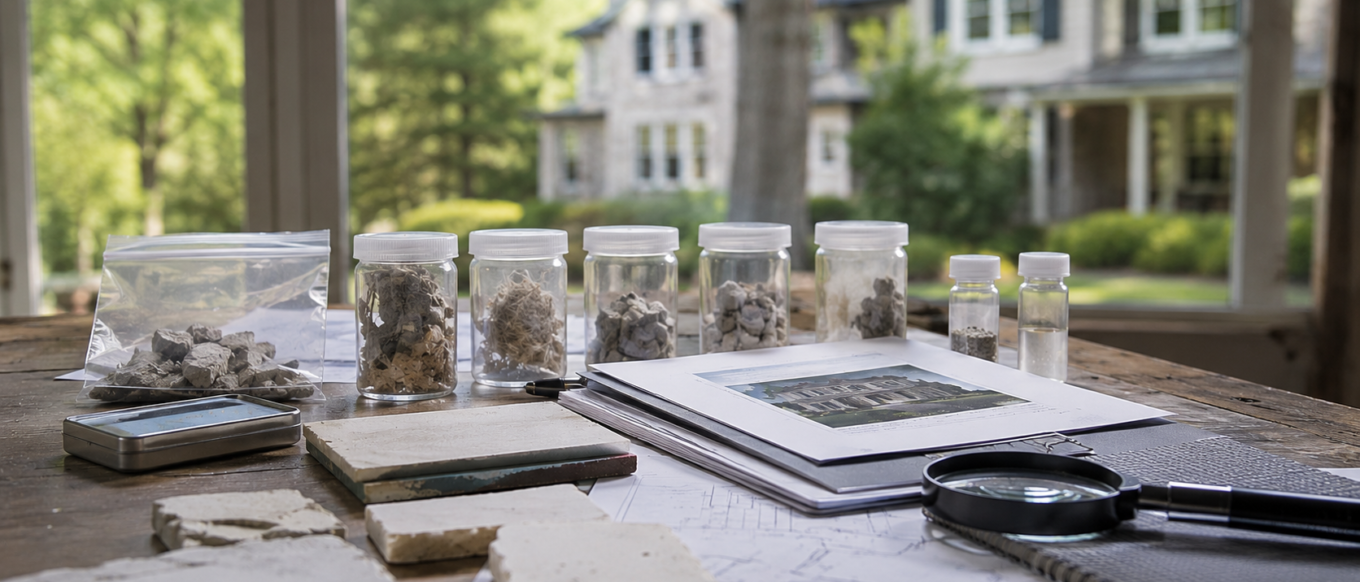
The sample is placed into an appropriate container or sealed sample bag.
Each sample is then labeled for identification.
Documenting Sample Locations
Accurate documentation is an important part of the process.
Information may include:
- Sample location
- Material description
- Building area
- Date of collection
- Sample identification number
This documentation helps ensure that laboratory results can be correctly matched to the original material.
Why Multiple Samples May Be Needed
Homeowners are sometimes surprised when more than one sample is collected.
The reason is simple: not all materials are uniform.
For example:
- Flooring in one room may differ from flooring in another.
- Multiple layers of flooring may exist beneath newer coverings.
- Different ceiling textures may be present throughout a home.
Collecting multiple representative samples helps improve confidence that the materials being evaluated are accurately characterized.
The number of samples depends on the variety and extent of suspect materials present.
What Happens After Samples Are Collected?
Once collection is complete, the samples are submitted to a laboratory for analysis.
Laboratory Examination
The laboratory evaluates the material using approved analytical methods designed to identify asbestos fibers.
The analysis determines:
- Whether asbestos is present
- The type of asbestos identified
- The percentage of asbestos within the sample
Reporting Results
Laboratory findings are compiled into a report identifying the materials tested and the analytical results.
These findings can then be used to support renovation planning, demolition preparation, or property evaluations.
How Long Does Asbestos Testing Take?
The timeline depends on several factors.
These may include:
- Laboratory workload
- Number of samples
- Analytical methods used
- Requested turnaround time
In many cases, results are available within several business days, although timing can vary.
Homeowners planning renovations often benefit from scheduling testing well before construction is scheduled to begin.
Asbestos Sampling During Renovation Planning
One of the most common reasons homeowners pursue asbestos testing is renovation preparation.
Consider a homeowner in Westchester County planning to remodel a kitchen built in the 1960s.
The project includes:
- Removing flooring
- Demolishing walls
- Updating electrical systems
Without testing, contractors may not know whether asbestos-containing materials are present until demolition begins.
Sampling before construction allows the homeowner to better understand the materials involved and avoid unexpected project interruptions.
Asbestos Sampling During Real Estate Transactions
Sampling occasionally occurs during home purchases as well.
Why Buyers Request Testing
Buyers purchasing older homes may want information about:
- Future renovation considerations
- Existing building materials
- Environmental conditions
Why Sellers Sometimes Test
Some sellers choose to evaluate suspect materials before listing a property, particularly if future buyers are likely to ask questions regarding older building components.
In either case, testing provides information rather than assumptions.
Common Misconceptions About Asbestos Sampling
“A Single Sample Tests the Entire House”
Not necessarily.
Each sample only represents the material collected from that specific location.
“All Older Materials Contain Asbestos”
Many older materials contain asbestos, but many do not.
Testing is necessary to determine whether a specific material contains asbestos.
“The Sampling Process Causes Major Damage”
In most situations, only a small amount of material is collected for laboratory analysis.
“Visual Inspection Is Enough”
Laboratory testing remains the most reliable method of confirming whether asbestos is present.
Asbestos Sampling in Hudson Valley Homes
Throughout Westchester County, Putnam County, and Dutchess County, many homes were built during periods when asbestos-containing materials were commonly used.
As these properties undergo renovations, additions, and modernization projects, asbestos sampling often becomes an important planning tool.
Whether evaluating floor tiles in a mid-century ranch, pipe insulation in an older farmhouse, or ceiling textures in a suburban colonial, proper sample collection helps provide accurate information about the materials involved.
Frequently Asked Questions
How much material is needed for asbestos testing?
Typically, only a small representative sample is required for laboratory analysis.
Can asbestos be identified without testing?
Generally, no. Many asbestos-containing materials resemble non-asbestos materials and require laboratory confirmation.
Why are multiple samples sometimes collected?
Different materials may exist throughout a building, and multiple samples help ensure representative testing.
How long does asbestos testing take?
Results are often available within several business days, depending on the laboratory and requested turnaround time.
Should samples be collected before renovation?
If suspect materials may be disturbed during renovation, testing can provide valuable information before work begins.
Conclusion
Asbestos sample collection is the first step in determining whether building materials contain asbestos. The process typically involves identifying suspect materials, collecting representative samples, documenting their locations, and submitting them to a laboratory for analysis. Because asbestos cannot usually be identified through appearance alone, laboratory testing remains the most reliable way to confirm its presence. Understanding how samples are collected can help homeowners better prepare for renovations, property purchases, and other projects involving older buildings.
For homeowners, buyers, and property sellers throughout Westchester County, Putnam County, Dutchess County, and the Hudson Valley, asbestos testing can provide valuable information about building materials and support informed decisions before renovation or construction projects begin.
If you have questions regarding asbestos testing, renovation planning, property transactions, or environmental testing services in New York, Inside Diagnostics can help discuss available testing options and appropriate next steps for your property.