







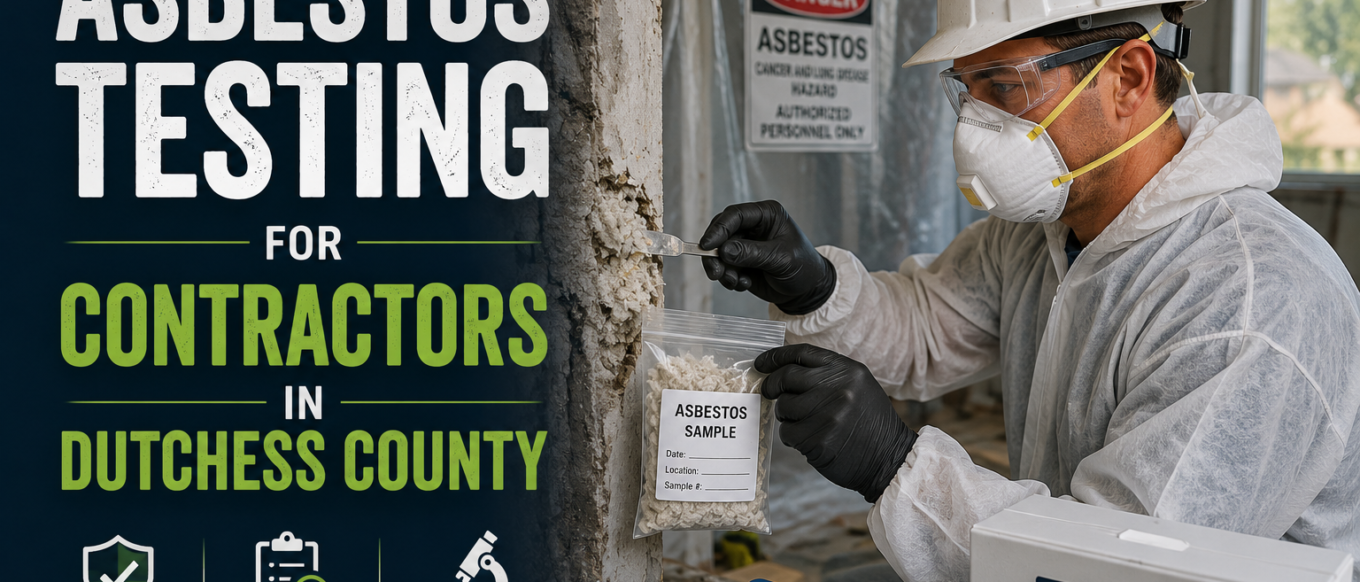
Contractors working on renovation, remodeling, demolition, and rehabilitation projects throughout Dutchess County frequently encounter older building materials that may contain asbestos. Whether the project involves a residential home in Poughkeepsie, a historic property in Rhinebeck, a commercial building in Fishkill, or a multifamily structure in Beacon, identifying asbestos-containing materials before construction begins can help prevent costly delays and unexpected discoveries.
Many buildings throughout Dutchess County were constructed during decades when asbestos-containing materials were widely used in residential, commercial, institutional, and industrial construction. Because asbestos was incorporated into thousands of products, contractors often encounter suspect materials during flooring removal, wall demolition, ceiling renovations, roofing projects, and building alterations.
Asbestos testing provides contractors with objective laboratory results regarding suspect materials before they are disturbed. This information helps project owners, contractors, and construction teams plan work more effectively and avoid surprises once demolition begins.
Why Contractors Encounter Asbestos So Frequently
One of the biggest challenges facing contractors in Dutchess County is the age of the local building stock.
Communities such as Poughkeepsie, Beacon, Fishkill, Hyde Park, Wappingers Falls, Rhinebeck, Red Hook, Millbrook, Pleasant Valley, and East Fishkill contain thousands of structures built before modern asbestos regulations were implemented.
For decades, asbestos was used because it offered:
- Fire resistance
- Heat resistance
- Moisture resistance
- Durability
- Sound insulation
- Affordability
Manufacturers incorporated asbestos into numerous construction materials that remain in place today. As a result, contractors regularly encounter suspect materials during routine renovation projects.
A building may look modern because it has been updated over the years, yet hidden layers of older materials may still exist beneath newer finishes.
Common Projects That Trigger Asbestos Concerns
Contractors often discover suspect materials during projects involving:
Kitchen Renovations
Removing flooring, cabinets, drywall, and ceiling materials may expose older building products that were never removed during previous remodels.
Bathroom Remodeling
Many older bathrooms contain multiple layers of flooring, wall materials, adhesives, and ceiling finishes that may warrant testing before demolition.
Flooring Replacement
Flooring projects frequently uncover older layers hidden beneath newer installations.
Examples include:
- Vinyl floor tile
- Sheet flooring
- Floor mastics
- Underlayment materials
Basement Renovations
Finished and unfinished basements often contain pipe insulation, adhesives, flooring materials, and ceiling products that may contain asbestos.
Commercial Tenant Improvements
Office renovations, retail buildouts, and commercial remodeling projects often involve demolition of existing building materials.
Demolition Projects
Whether partial or full demolition is planned, identifying asbestos-containing materials before work begins can help prevent significant project interruptions.
Common Asbestos-Containing Materials Contractors Encounter
Many contractors are surprised by the number of building materials that historically contained asbestos.
Some of the most common examples include:
Floor Tile
Older vinyl floor tiles are among the most frequently tested materials during renovation projects.
Black Mastic Adhesive
The adhesive beneath older flooring often contains asbestos even when the flooring itself does not.
Drywall Joint Compound
Joint compound used to finish drywall seams may contain asbestos in older buildings.
Popcorn Ceilings
Textured ceiling finishes installed before modern regulations may contain asbestos fibers.
Ceiling Tiles
Older acoustic ceiling products occasionally contain asbestos.
Roofing Materials
Roofing products such as shingles, mastics, flashing materials, and roofing felts may contain asbestos.
Cement Siding
Certain siding products manufactured decades ago incorporated asbestos fibers.
Pipe Insulation
Older heating systems may contain asbestos insulation around pipes, elbows, fittings, and boilers.
Because asbestos-containing materials often look identical to non-asbestos materials, laboratory testing remains the only reliable method of confirmation.
Why Visual Inspection Alone Is Not Enough
Contractors frequently ask whether asbestos can be identified by appearance alone.
The answer is no.
Many materials that appear harmless may contain asbestos, while other materials that look suspicious may contain none.
For example:
- Two identical floor tiles may produce different laboratory results.
- Similar-looking ceiling textures may contain different fiber concentrations.
- Flooring adhesives often cannot be accurately identified visually.
Without laboratory analysis, assumptions can lead to project delays and unexpected discoveries after demolition begins.
How Asbestos Testing Helps Contractors
Contractors often operate on tight schedules and fixed budgets.
Unexpected asbestos discoveries can create several challenges:
Project Delays
Work may stop while suspect materials are evaluated and tested.
Change Orders
Additional costs may arise if asbestos-containing materials are discovered after demolition begins.
Scheduling Conflicts
Subcontractors and project timelines may be affected by unexpected findings.
Budget Impacts
Property owners may face increased costs if asbestos issues are identified late in the project.
Testing before renovation allows contractors to better understand existing conditions and plan accordingly.
When Should Contractors Schedule Testing?
The best time to schedule asbestos testing is before materials are disturbed.
Testing is commonly performed before:
- Interior demolition
- Flooring removal
- Ceiling removal
- Wall demolition
- Bathroom renovations
- Kitchen remodels
- Building additions
- Commercial renovations
- Structural alterations
- Demolition projects
Waiting until demolition has already started often creates avoidable complications.
What Happens During an Asbestos Survey?
A pre-renovation asbestos survey typically begins with an inspection of the areas affected by the planned work.
Suspect materials are identified and representative samples are collected for laboratory analysis.
Materials commonly sampled include:
- Floor tile
- Adhesives
- Ceiling textures
- Drywall compound
- Roofing materials
- Siding
- Insulation products
Once laboratory results are received, contractors and property owners can use the information to determine how the project should proceed.
Working on Historic Properties in Dutchess County
Dutchess County contains many historic homes, commercial buildings, and institutional properties.
Contractors performing work on older structures often encounter multiple generations of renovations layered on