





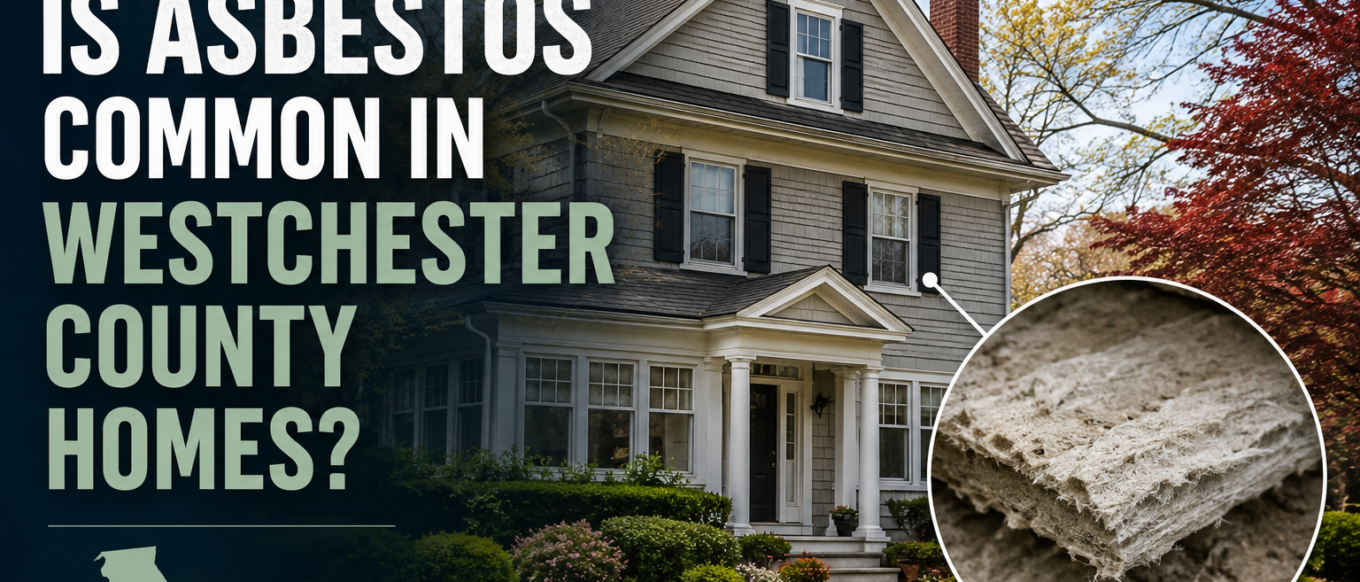
If you own an older home in Westchester County, there is a good chance that asbestos-containing materials may still be present somewhere in the property. While asbestos was once widely used in residential and commercial construction because of its durability and heat-resistant properties, it is now recognized as a health hazard when disturbed.
Many homes throughout Westchester County were built during the decades when asbestos-containing materials were commonly installed in flooring, insulation, ceiling products, roofing materials, adhesives, and other building components. As a result, homeowners, contractors, and property managers often encounter asbestos concerns during renovation, remodeling, and demolition projects.
Understanding where asbestos may be found and when testing is recommended can help property owners avoid project delays and make informed decisions before construction work begins.
Why Is Asbestos Common in Westchester County?
Westchester County contains a large inventory of homes built before the 1980s. Communities such as White Plains, Yonkers, New Rochelle, Mount Vernon, Scarsdale, Rye, Bronxville, Tarrytown, Ossining, Yorktown, and Mount Kisco all contain neighborhoods with homes that were constructed during periods when asbestos-containing materials were routinely used.
For decades, asbestos was considered a valuable construction material because it offered several advantages:
- Fire resistance
- Heat resistance
- Durability
- Sound insulation
- Moisture resistance
- Low cost
Manufacturers incorporated asbestos into thousands of building products. Many of those products remain in place today because asbestos does not simply disappear over time.
The age of a property alone does not confirm the presence of asbestos. However, homes built before asbestos regulations changed are generally more likely to contain asbestos-containing materials than newer properties.
Common Locations Where Asbestos May Be Found
One of the most common misconceptions is that asbestos exists only in insulation. In reality, asbestos was used in a wide variety of building products.
Some of the most frequently encountered materials include:
Floor Tiles
Vinyl floor tiles installed during the mid-20th century often contained asbestos. Older 9-inch floor tiles are particularly well known for containing asbestos, although larger tiles and sheet flooring may also contain asbestos.
Mastic and Adhesives
The black adhesive used beneath floor tiles is often referred to as mastic. Some older mastics contain asbestos and require laboratory analysis to determine their composition.
Drywall Joint Compound
Joint compound used to finish drywall seams may contain asbestos in older homes. Contractors performing demolition or wall removal frequently test these materials before renovation work begins.
Popcorn Ceilings
Textured ceiling finishes installed before modern regulations may contain asbestos. Testing is often recommended before scraping or removing these ceiling textures.
Pipe Insulation
Older heating systems may contain asbestos insulation around pipes, boilers, ductwork, and related equipment.
Roofing Materials
Roof shingles, roofing felt, flashing materials, and roofing mastics may contain asbestos in older structures.
Siding
Certain cement siding products manufactured decades ago contained asbestos fibers.
Ceiling Tiles
Some older acoustic ceiling tiles and associated adhesives may contain asbestos.
Because many asbestos-containing materials look identical to non-asbestos materials, visual inspection alone cannot determine whether asbestos is present.
Can You Identify Asbestos by Looking at It?
No.
One of the most important things property owners should understand is that asbestos cannot be reliably identified through visual observation alone.
Many homeowners search online for photos of asbestos-containing materials and try to compare them to materials in their own homes. Unfortunately, two materials may appear identical while only one contains asbestos.
Laboratory analysis remains the most reliable method for determining whether a suspect material contains asbestos fibers.
This is why professional asbestos testing is often performed before renovation or demolition activities begin.
Is Asbestos Dangerous If Left Alone?
Asbestos-containing materials that remain in good condition and are not disturbed generally present less risk than materials that are cut, sanded, drilled, broken, or removed.
The greatest concern arises when asbestos fibers become airborne. Once released into the air, fibers may be inhaled and can remain suspended for extended periods.
Renovation projects frequently disturb building materials that have remained untouched for decades. Activities such as:
- Removing flooring
- Demolishing walls
- Replacing ceilings
- Remodeling bathrooms
- Kitchen renovations
- Opening wall cavities
- Removing insulation
can potentially release asbestos fibers if asbestos-containing materials are present.
This is why testing before construction work is often recommended.
When Should Westchester County Homeowners Consider Asbestos Testing?
Property owners frequently schedule asbestos testing when they are planning:
Home Renovations
Kitchen remodels, bathroom renovations, basement finishing projects, and room additions often involve disturbing existing materials.
Flooring Replacement
Removing old floor tiles, sheet flooring, or adhesives may require testing beforehand.
Ceiling Removal
Textured ceilings, ceiling tiles, and related materials are common testing candidates.
Demolition Projects
Partial and full demolition projects often require identification of asbestos-containing materials before work proceeds.
Property Transactions
Some buyers and property owners choose to conduct testing to better understand potential renovation costs and future considerations.
Contractor Requests
Many contractors prefer to know whether suspect materials contain asbestos before beginning work.
What Does an Asbestos Survey Involve?
A pre-renovation asbestos survey typically involves a visual inspection of the areas affected by planned work.
Suspect materials are identified and representative samples are collected for laboratory analysis.
Depending on the project, sampled materials may include:
- Flooring
- Adhesives
- Ceiling textures
- Drywall compounds
- Insulation
- Roofing materials
- Siding materials
After analysis is completed, the laboratory provides results indicating whether asbestos was detected within the submitted samples.
The information can then be used by property owners, contractors, and project planners to make informed decisions about next steps.
Older Homes in Westchester County Often Require Extra Attention
Westchester County contains many beautiful historic homes that were built long before modern construction standards were adopted.
While these properties offer character and craftsmanship that many homeowners appreciate, older construction frequently includes building materials that are no longer used today.
Properties built during the 1940s, 1950s, 1960s, and 1970s are particularly common candidates for asbestos testing when renovation work is planned.
Rather than guessing whether a material contains asbestos, testing provides objective information that can help avoid unexpected discoveries after demolition has already started.
Why Professional Testing Matters
Property owners occasionally consider DIY asbestos test kits. While these kits exist, proper sample collection is important because disturbing materials incorrectly can create unnecessary exposure concerns.
Professional asbestos testing provides a structured approach to identifying suspect materials and obtaining representative samples for laboratory analysis.
For homeowners planning renovations, professional testing can provide clarity before construction begins.
Asbestos Testing in Westchester County
Asbestos remains common in many older Westchester County homes because countless building materials installed decades ago are still present today. While not every older property contains asbestos, it is impossible to determine with certainty through visual inspection alone.
If you are planning a renovation, demolition project, flooring replacement, ceiling removal, or other construction activity, asbestos testing can help identify suspect materials before work begins.
Inside Diagnostics provides asbestos testing and pre-renovation asbestos surveys for homeowners, contractors, and property managers throughout Westchester County.
Learn more about our Asbestos Testing services, explore our Pre-Renovation Asbestos Survey process, or schedule an appointment through our Book Asbestos Testing page.