






Purchasing an older home can be exciting. Historic architecture, established neighborhoods, mature landscaping, and unique craftsmanship often attract buyers to properties built decades ago. However, older homes can also contain building materials that are no longer commonly used in modern construction, including asbestos-containing materials.
For many buyers, the question naturally arises during the inspection process: should asbestos testing be part of the evaluation before purchasing an older property?
The answer depends on the age of the home, the condition of the materials present, and the buyer’s future plans for the property. While asbestos testing is not required for every real estate transaction, it is often worth considering when purchasing an older home, particularly if renovations, remodeling, or demolition work are planned. Testing can help identify whether suspect materials contain asbestos and provide valuable information about the property’s building materials before ownership changes hands.
For home buyers throughout New York and the Hudson Valley, understanding the role of asbestos testing during a real estate transaction can help support informed decisions and reduce surprises after closing.
What Is Asbestos?
Asbestos is a naturally occurring mineral that was widely used in construction products throughout much of the twentieth century.
Manufacturers valued asbestos because it offered:
- Fire resistance
- Heat resistance
- Durability
- Strength
- Insulating properties
As a result, asbestos was incorporated into thousands of residential and commercial building products.
Many homes built before the 1980s may contain one or more asbestos-containing materials.
Importantly, the presence of asbestos does not automatically mean a home is unsafe. In many cases, asbestos-containing materials remain intact and undisturbed for decades without creating immediate concerns.
Why Older Homes Are More Likely to Contain Asbestos
The likelihood of encountering asbestos generally increases with the age of the property.
Homes constructed during the 1940s, 1950s, 1960s, and 1970s commonly utilized products that may contain asbestos.
Examples include:
- Floor tiles
- Vinyl sheet flooring
- Flooring adhesives
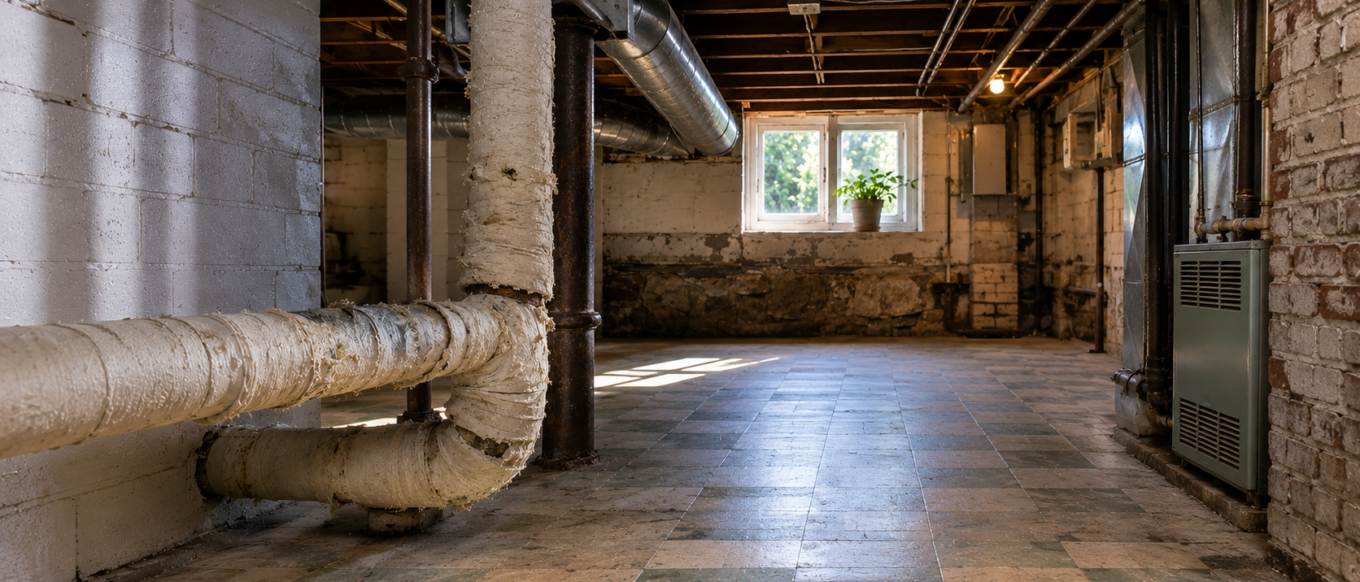
- Pipe insulation
- Boiler insulation
- Ceiling textures
- Joint compound
- Cement siding
- Roofing materials
Many of these materials are still found in homes throughout:
- Westchester County
- Putnam County
- Dutchess County
Because older housing stock remains common throughout the Hudson Valley, asbestos is often part of renovation and home inspection discussions.
Why Buyers Consider Asbestos Testing
Not every buyer requests asbestos testing, but there are several situations where additional evaluation may make sense.
Planning Future Renovations
One of the most common reasons buyers pursue asbestos testing is because they intend to renovate the property after purchase.
Examples include:
- Kitchen remodeling
- Bathroom renovations
- Basement finishing
- Flooring replacement
- Wall removal
- Home additions
If older materials will be disturbed during construction, understanding whether asbestos is present can help buyers plan appropriately.
Purchasing a Home With Original Materials
Some properties retain many original building materials decades after construction.
If flooring, insulation, siding, ceilings, or other materials appear original, testing may provide useful information about future maintenance and renovation considerations.
Reducing Uncertainty
Buying a home often involves making decisions based on available information.
Testing allows buyers to replace assumptions with laboratory-confirmed results.
What a Home Inspection Does—and Does Not Do
Many buyers assume a standard home inspection includes asbestos identification.
In most cases, it does not.
A traditional home inspection typically evaluates:
- Roofing systems
- Structural components
- Electrical systems
- Plumbing systems
- HVAC equipment
- General property conditions
However, inspectors generally cannot determine whether a material contains asbestos through visual observation alone.
This is because asbestos-containing materials often look identical to non-asbestos materials.
Laboratory analysis is typically required for confirmation.
Common Materials Buyers Ask About
Certain materials frequently generate questions during real estate transactions involving older homes.
Floor Tiles
Older vinyl floor tiles are among the most commonly encountered materials associated with asbestos.
Buyers often notice these materials in:
- Basements
- Kitchens
- Utility rooms
- Older finished spaces
Flooring Adhesives
Even when floor coverings have been replaced, original adhesives may remain beneath newer flooring systems.
Ceiling Textures
Textured ceilings occasionally contain asbestos depending on the product and installation period.
Pipe and Boiler Insulation
Older heating systems may include insulation materials that warrant evaluation.
Cement Siding
Certain cement siding products manufactured decades ago incorporated asbestos fibers for strength and durability.
Does Every Older Home Need Asbestos Testing?
Not necessarily.
The decision depends on several factors.
Material Condition
If suspect materials are intact and in good condition, immediate testing may not always be necessary.
Future Plans
A buyer planning extensive renovations may have different testing needs than a buyer intending to leave the property largely unchanged.
Property Age
The older the home, the greater the likelihood that asbestos-containing materials may be present.
Buyer Preferences
Some buyers simply want additional information before making a significant investment.
Others may choose to evaluate materials later if renovation plans develop.
There is no universal answer that applies to every property.
When Testing Is Most Valuable
Although every transaction is different, asbestos testing often provides the greatest value in several situations.
Before Major Renovations
A buyer purchasing an older home with plans to remodel shortly after closing may benefit from understanding which materials contain asbestos before construction begins.
Before Demolition Projects
If walls, flooring, ceilings, or other building components will be removed, testing can help identify issues before contractors arrive on site.
When Original Materials Remain
Properties with substantial original construction materials may warrant additional evaluation depending on the buyer’s goals.
What Happens During Asbestos Testing?
The testing process is generally straightforward.
Identifying Suspect Materials
Materials that may contain asbestos are identified based on:
- Building age
- Material type
- Planned renovation activities
Sample Collection
Small representative samples are collected from suspect materials.
Examples may include:
- Flooring
- Joint compound
- Ceiling textures
- Insulation
- Roofing materials
Laboratory Analysis
Samples are submitted to a laboratory where they are analyzed for asbestos content.
Results Review
The laboratory findings provide information regarding whether asbestos is present in the materials tested.
What If Asbestos Is Found?
Finding asbestos during a home purchase does not necessarily mean the transaction should stop.
In fact, many homes containing asbestos are bought and sold every year.
The appropriate response depends on:
- Material condition
- Material location
- Planned renovations
- Future use of the property
Possible approaches may include:
Leaving Materials Undisturbed
Many asbestos-containing materials remain in place without requiring immediate action.
Monitoring Material Condition
Some homeowners simply monitor materials over time and avoid disturbing them unnecessarily.
Renovation Planning
If renovations are planned, buyers can use the information to better prepare for future work.
Professional Removal
In certain situations, removal may be considered as part of a larger renovation project.
Practical Example
Imagine a buyer purchasing a 1965 home in Dutchess County.
The home contains original basement floor tiles and older pipe insulation.
The buyer plans to finish the basement within the first year of ownership.
Rather than beginning construction and discovering potential asbestos-containing materials midway through demolition, the buyer chooses to perform testing during the due diligence period.
The results provide valuable information before closing and allow future renovation plans to proceed with greater confidence.
This is one of the most common reasons asbestos testing is requested during a real estate transaction.
Older Homes Throughout the Hudson Valley
Many communities throughout:
- Westchester County
- Putnam County
- Dutchess County
contain housing stock built during periods when asbestos-containing materials were widely used.
Whether purchasing a historic farmhouse, a mid-century ranch, a colonial home, or a traditional suburban residence, buyers frequently encounter original building materials that may warrant additional evaluation.
Because renovation and modernization projects are common throughout the Hudson Valley, asbestos testing often becomes part of broader planning discussions.
Common Misconceptions About Asbestos and Home Purchases
“Every Older Home Has Asbestos”
Not every older home contains asbestos-containing materials.
Testing is necessary to determine whether specific materials contain asbestos.
“If Asbestos Is Present, I Shouldn’t Buy the Home”
Many homes containing asbestos are successfully bought and sold every year.
The presence of asbestos does not automatically make a property unsuitable for purchase.
“A Home Inspection Will Identify Asbestos”
A standard home inspection generally does not confirm asbestos content.
Laboratory analysis is typically required.
“Asbestos Is Only a Concern During Demolition”
Renovation and remodeling activities can also disturb asbestos-containing materials.
Frequently Asked Questions
Should I test for asbestos before buying an older home?
Testing may be worthwhile if the home contains older materials or if renovations are planned after purchase.
Can asbestos be identified visually?
No. Many asbestos-containing materials resemble non-asbestos materials and require laboratory analysis for confirmation.
Is asbestos testing part of a standard home inspection?
Typically, no. Asbestos testing is usually performed as a separate service.
What if asbestos is found during the transaction?
The results can help buyers and sellers make informed decisions regarding future maintenance, renovation planning, or other considerations.
Are older homes in the Hudson Valley likely to contain asbestos?
Many homes built before the 1980s in Westchester County, Putnam County, and Dutchess County may contain materials that warrant evaluation.
Conclusion
Buying an older home often involves evaluating building materials that were commonly used decades ago, including products that may contain asbestos. While asbestos testing is not necessary for every real estate transaction, it can provide valuable information when older materials are present, renovations are planned, or buyers want a clearer understanding of the property’s condition. Because asbestos cannot typically be identified through visual inspection alone, laboratory testing remains the most reliable method of determining whether suspect materials contain asbestos.
For homeowners, buyers, and property sellers throughout Westchester County, Putnam County, Dutchess County, and the Hudson Valley, asbestos testing can provide important information that supports informed real estate and renovation decisions.
If you have questions regarding asbestos testing, home purchases, renovation planning, or environmental testing services in New York, Inside Diagnostics can help discuss available testing options and appropriate next steps for your property.