





Yes. Have old, suspect pipe insulation professionally evaluated before a boiler replacement that could disturb it. Testing may be part of that evaluation, but the inspection should follow the actual work plan, not just the most obvious pipe. Do not peel back insulation, remove a piece, or let installation start while its status remains unresolved. Intact insulation outside the work area may need a different approach from material that must be disturbed.
For homeowners in Westchester and the Hudson Valley, the useful first question is not simply “Does this look like asbestos?” It is “Which materials will this replacement affect, and have they been addressed?”
Why a boiler replacement changes the question
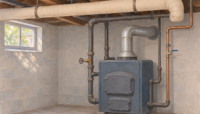
A heating system can operate for years without anyone touching its insulation. Replacing the boiler introduces a new set of tasks: disconnecting equipment, changing pipe connections, moving a heavy unit, and possibly altering nearby walls or ceilings. Ask the installer which of those tasks are actually included.
The EPA identifies hot-water and steam-pipe coverings among materials that may contain asbestos. It also explains that disturbance during maintenance, repair, and remodeling can release fibers. That makes the replacement plan relevant even when the insulation has not previously caused concern.
“We are only changing the boiler” is a description of the goal, not a complete description of the work. Before booking the installation, get a written outline of what stays, what goes, and how the equipment will enter and leave the basement.
Do not diagnose pipe insulation by appearance
A photograph can help an inspector understand access and plan a visit. It cannot establish whether the material contains asbestos. Color, a cloth-like outer surface, or the age of the boiler is not a laboratory result. The current equipment may also be newer than other parts of the heating system.
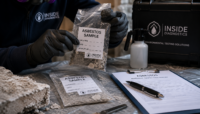
The EPA recommends professional sampling rather than taking your own sample. Leave suspect insulation untouched. Do not cut a viewing window, pull off a loose edge, or open a covering to improve a photograph.
Instead, describe what you can see from an accessible position: where the insulation is, whether the installer expects to work nearby, and whether any damage is already visible. Keep the original photos and send them with the contractor’s scope, rather than trying to prove the material’s identity yourself.
Ask about the whole affected area, not one convenient sample
Inside Diagnostics offers targeted asbestos testing and broader surveys. Those are different assignments. Checking one accessible material does not automatically address every material involved in a boiler replacement.
Use this planning checklist with your installer and inspector:
- Pipework: Which existing runs and connections will be retained, cut, disconnected, or replaced?
- Fittings and repairs: Are there visibly different coverings at bends, valves, or repaired sections that need the inspector’s attention?
- Equipment: Will work involve insulation or other suspect components associated with the old boiler?
- Surroundings: Will the project open walls, ceilings, or other building materials?
- Access: Could the removal route bring equipment or workers into contact with insulated pipes?
This is a discussion checklist, not a sampling specification. The inspector determines which materials need separate evaluation and how the findings should be documented. Do not choose a sample count solely from a booking package or assume that visually similar coverings are interchangeable.
New York requirements need attention before work
The New York State Department of Labor’s asbestos survey guidance addresses demolition, renovation, remodeling, and repair. Where a survey is required, it calls for a certified New York State asbestos inspector and completion before work begins. The rule has exceptions, but an exception to the state survey requirement does not automatically remove obligations under other rules.
Do not treat a contractor’s permit checklist as the entire asbestos review. Ask the inspector how the state requirements apply to the proposed replacement, and confirm local documentation needs with the building department. Avoid assuming that a small project, an older permit, or a newer boiler settles the question.
A pre-renovation asbestos survey is scoped to the affected area. Explain the planned pipe changes and equipment removal so the scope can be agreed before the visit. A report should make clear what was inspected and what remained inaccessible.
What if the result is positive?
A positive finding is a reason to coordinate the next step before installation, not to start stripping insulation. The EPA describes professional repair and removal as different options; material in good condition that will remain undisturbed can often be left alone. Planned disturbance can change that decision.
Ask the qualified asbestos professionals and heating contractor to agree on the sequence. Which affected materials need attention? Who will perform that work? What documentation is needed before the heating installation resumes? Keep the answers with the replacement proposal so neither company assumes the other has handled an unresolved item.
Inside Diagnostics provides independent inspection, testing, and survey documentation. It does not perform asbestos removal or abatement. Inspection should not be mistaken for an abatement contract, and a laboratory result should not be mistaken for permission to begin removal.
What if the insulation is damaged or the schedule is urgent?
If suspect insulation is damaged, avoid the area and do not sweep or vacuum debris. EPA homeowner guidance advises limiting activity around damaged material and involving trained professionals. Do not improvise a repair with tape, paint, or a new wrap.
Tell both the heating contractor and inspector if the home has lost heat or the installation date is approaching. Ask them to explain the available sequence and any additional evaluation needed. Do not assume a rush appointment includes laboratory results, asbestos work, and permission to restart the heating project on the same day.
Bring these details when you request an appointment
Have your town, installer’s work description, proposed date, accessible photos, and any previous asbestos reports ready. Highlight anything the installer has not yet decided, especially pipe rerouting or opening concealed spaces. If the plan changes later, review whether the existing asbestos survey still covers the work before proceeding.
Inside Diagnostics serves Westchester, Putnam, Dutchess, Rockland, and Orange counties. Request an asbestos appointment or call or text (914) 879-5022. Describe the boiler replacement rather than requesting an arbitrary number of samples. The goal is a documented plan for the materials the job will actually affect.