





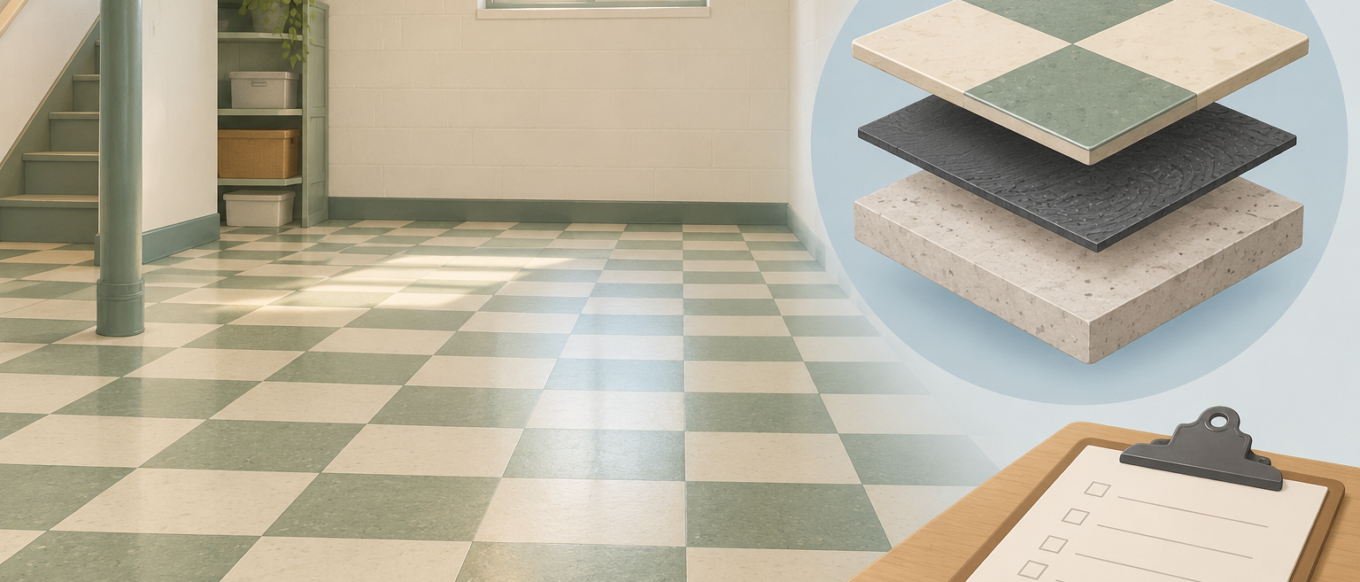
If your flooring project will disturb both old tiles and the adhesive underneath, both materials need to be considered in the asbestos evaluation. A result for the tile alone does not establish whether the adhesive contains asbestos. A qualified asbestos inspector should decide which materials and layers need sampling, based on the flooring and planned work. Leave everything in place while that scope is worked out.
That distinction matters when a simple flooring update turns into questions about what is underneath. Here is how to ask for useful answers before your contractor starts.
Why the tile and adhesive are separate questions
A floor is a collection of materials. The surface you walk on may sit over adhesive, backing, an earlier floor covering, or other layers. Those materials may have been installed at different times. The age of the house does not tell you when every layer was added.
EPA identifies certain resilient floor tiles, sheet-flooring backing, and installation adhesives as products that have contained asbestos. Finding one suspect material does not tell you the composition of another. Similarly, a newer-looking surface does not explain what earlier materials remain below it.
When discussing testing, describe the entire proposed task. “Replace the basement floor” leaves important questions open. Will the existing surface stay in place? Does the contractor expect to remove adhesive or disturb underlying material? Ask the contractor to describe the work in writing, without starting exploratory removal.
Can tile size or black adhesive identify asbestos?
Neither a familiar tile pattern nor dark adhesive provides a reliable visual answer. Online photographs can look convincing, but they cannot establish what your particular material contains. A photo is useful for discussing the location and visible condition with an inspector; it is not a laboratory result.
There is no need to lift a corner to get a better picture. EPA’s homeowner asbestos guidance recommends professional sampling because incorrect collection can release fibers. Share photographs you already have, or views you can obtain without touching or disturbing the material.
What should you ask the inspector to evaluate?
Start with the rooms and boundaries of the flooring project. Note whether the same-looking flooring continues into a closet, hallway, or adjoining room. Mention changes in color or pattern that are already visible. Let the inspector decide whether those differences affect the sampling plan.
Useful questions include:
- Does the proposed evaluation cover the tile, adhesive, and any other suspect layers affected by this work?
- Which rooms and material areas will the report address?
- Are any layers inaccessible, and how will that limitation be documented?
- What should happen if the contractor later encounters a different material?
Our asbestos testing FAQ explains why testing tile alone may be insufficient when adhesive will also be disturbed. The appropriate approach depends on the actual materials and project scope. Avoid choosing a sample count yourself based on room size or a photograph.
When does a flooring concern call for a survey?
A question about one isolated material can differ from a renovation involving several rooms or building components. If the flooring job also includes wall removal, ceiling work, or changes around older insulation, tell the inspector before the appointment. Those tasks can change the evaluation needed.
Inside Diagnostics offers pre-renovation asbestos surveys for defined work areas. The scope establishes which areas and suspect materials are reviewed. A limited flooring evaluation should not be described as a whole-house clearance.
Keep the written scope beside your contractor’s estimate. If one says “laundry room floor” and the other includes the adjoining hallway, ask about the mismatch before work starts. This small administrative check can prevent confusion about what the report actually covers.
How should you read the results?
Look for the material description, sample location, and laboratory result together. Ask the inspector to explain how the report addresses the different layers. If a report names only floor tile, clarify whether adhesive was evaluated rather than assuming it shares the same result.
The New York State Department of Health describes separate analytical methods for bulk building materials and air samples. A material result answers a question about the submitted material. It does not, by itself, measure the air in the room or determine a person’s exposure.
If a result is positive, read our guide to next steps after a positive asbestos test. Review the finding with the appropriate professional before deciding how the flooring project should proceed.
What should happen while you wait?
Pause work that could disturb the suspect flooring or adhesive. Do not scrape, sand, drill, or collect a sample yourself. If suspect debris is present, do not sweep it or use a household vacuum. EPA cautions against these activities in its homeowner guidance.
Tell anyone scheduled to work in the area that the material is being evaluated. If it is already damaged or has been disturbed, describe the situation to an asbestos professional and ask about appropriate access precautions. Do not disturb it further to check its condition.
Check the New York requirements for your project
The New York State Department of Labor’s Asbestos Control Bureau provides survey guidance, contractor listings, and information about Industrial Code Rule 56. Ask your asbestos professional which requirements apply to the building and planned work. Your local building department can clarify permit documentation.
For a property in Westchester, Putnam, Dutchess, Orange, or Rockland County, give the actual town or village along with the address. A county name alone may not identify the permit office. Keep any written request from that office with your project documents so the inspector can see what is being requested.
Plan the flooring project with clear information
Inside Diagnostics provides independent asbestos inspection, sampling, laboratory coordination, and written documentation. We do not perform asbestos removal, abatement, or cleanup. Our role is to help establish what was evaluated before decisions about material disturbance are made.
To get started, schedule a Project Scope Assessment and describe the flooring, affected rooms, and planned work. This on-site assessment comes before a written proposal; it does not include sampling, laboratory analysis, clearance, or a final asbestos survey report. Bring any existing reports and contractor notes so the next step fits the project you actually plan to do.